
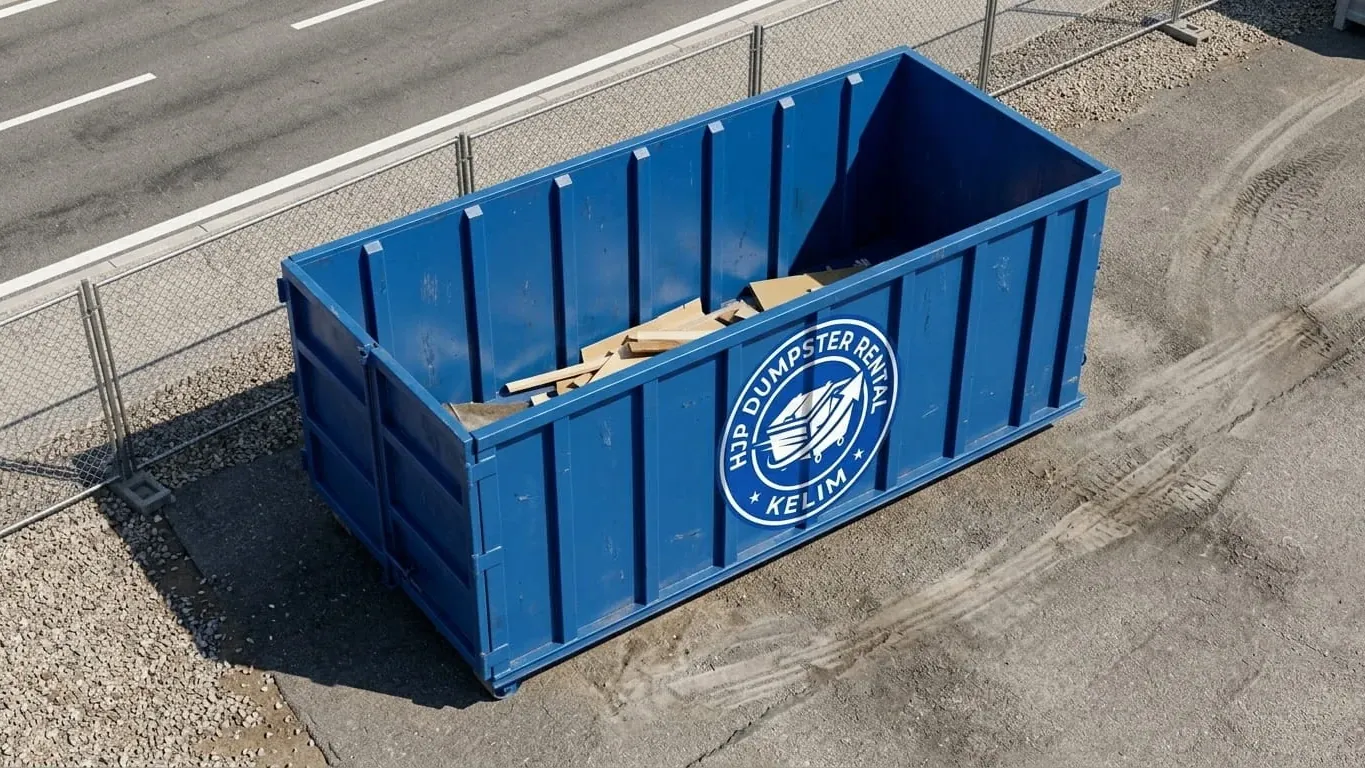
Concrete and heavy debris
Concrete And Heavy Debris Dumpster Rental in Kelim, CO
Small containers for the dense material — driveway breakout, patio slabs, block, brick, tile and the spoil off a thirty-inch trench. These loads are governed by lawful road weight, not by how much room is left in the box.
Heavy material is the one category where the small container is the right container, and the reason has nothing to do with how much you have. Every roll-off has a lawful road payload as well as a volume, and concrete, brick, block, tile, mortar bed, rock and soil all reach that payload long before they reach the top rail. A 30 yard box with a foot of broken driveway in the bottom of it is a truck that cannot legally leave your property, and the only remedy is unloading it by hand. So on this corridor, dense material goes in a 10 yard or a 15 yard, loaded flat across the whole floor, and if there is more than one box worth of it, the answer is two boxes or a booked second pull.
This market produces more of it than most, because of what is under the ground rather than on it. Both Weld and Larimer counties publish a 30-inch frost line — Weld’s design criteria give 30 inches for residential and commercial work, and Larimer states a 30-inch minimum frost depth countywide. Footings, water services and sewer laterals all go at least that deep, so a footing repair, a sewer dig, a deck-footing job or a service replacement here turns out more spoil than the same job produces in a warmer climate. Spoil is the densest thing that comes off a residential property, wetter and heavier again in spring, and it is the material we most often see booked into a container two sizes too large.
Keeping the load clean is worth real money on this side of the job. Colorado’s solid waste regulations at 6 CCR 1007-2 define construction and demolition debris and construction and demolition debris facilities separately from municipal solid waste landfills, and the landfill serving the south end of this market lists clean fill and soil, concrete and asphalt among the materials it accepts as their own categories. A clean masonry load and a mixed load are not the same thing at the gate. Mix broken concrete into drywall, cabinetry and carpet and the whole load becomes mixed debris; keep it clean and it keeps its own route. That is why on a job producing both, one small box for the masonry and a larger one for everything else is usually cheaper than a single container carrying the lot, even though it sounds like more.
There is a Colorado structure behind all of that which is worth knowing, because it explains where a load can and cannot go. A landfill in this state is not simply state-permitted: under C.R.S. § 30-20-102, a solid waste disposal site and facility operates under a Certificate of Designation issued by the county with jurisdiction over the area, with CDPHE review, and disposal is prohibited except at a facility holding one. That requirement attaches to the disposal facility, not to anybody hauling. Beyond the statewide electronics ban and the waste tire rules, what each facility will accept is largely set in its own approved operating plan rather than by a single statewide list — which is precisely why we ask what is in a heavy load before we quote it, and why the answer differs from one facility to the next. Our disposal guide works through it facility by facility.
On the ground, heavy work has its own rules. We set on plywood every time, and on a heavy load that matters more, not less, because the container is heaviest at the moment it is winched back onto the truck and that is when a driveway takes the load. In spring, when the ground has thawed and been watered, we will want the concrete or the road base rather than the graded shoulder — soft ground and ruts are the real risk in this market, and a loaded masonry box will find any of it. Load flat rather than heaping at the tailgate, keep the material below the marked fill line even when it looks early, and tell us honestly what is going in. Front Range Landfill publishes that all incoming loads are subject to random inspection and that uncovered or unsecured loads are charged double, so cover a dusty load before it moves. Call the yard on (970) 427-0341.
Heavy Loads We Handle Around Kelim
Driveway And Sidewalk Breakout
Broken concrete off a drive, apron, walk or patio. Clean, dense, and worth keeping as its own load because clean masonry has routes that a mixed load loses.
Patio, Step And Stoop Removal
Slab sections, poured steps, footings and the mortar that came with them. A small volume that becomes a full container by weight surprisingly quickly.
Trench And Footing Spoil
A 30-inch frost line means footings and services go deep, so a dig here produces real volume of soil and rock. The densest material on any residential site, and heavier again when it is wet.
Block, Brick And Stone
Foundation block, garden walls, brick from an old chimney or a fireplace surround, and dry-stacked stone. Loaded flat and low.
Tile And Mortar Bed
The quiet weight problem in a bathroom or kitchen rip-out. Tile set in a thick mortar bed will fill a container by weight while the room still looks half done.
Asphalt Sections
Cured asphalt off a driveway or an approach. The landfill serving the south end of this market lists concrete and asphalt among its accepted materials as their own category.
Clean Fill And Soil
Excess soil off a grading job or a landscape reshape. Clean fill is accepted as its own material locally, which makes keeping it separate worthwhile.
Fence Post And Footing Removal
Posts pulled with their concrete collars still attached. Awkward, heavy per piece, and much more of a weight load than a fence removal appears to be.
Which Container For Heavy Material
Two containers cover the whole category. The 10 yard is the weight box and it is the right answer for pure masonry, tile, mortar bed, soil, rock and trench spoil — a load of any of those will reach a lawful road payload well before the box is full, so the low sides are a feature rather than a limitation and everything loads over the rim rather than up a ladder. The 15 yard is for a heavy load that is not purely masonry: a bathroom rip-out with a mortar bed in it, a deck removal with concrete footings, a mixed but dense demolition load. Anything above a 15 is the wrong tool for this material, and we will say so on the phone rather than deliver a 30 that cannot leave. If the job produces both heavy and light material, the sensible arrangement is nearly always two containers — a small one for the dense fraction, loaded flat, and a larger one for the rest — because it keeps the masonry clean and keeps both loads lawful. Dimensions are on the container sizes page, and the sizing guide works through examples.
10 Yard Dumpster
Broken slab, block, brick and dirt — the box that reaches payload long before it looks full.
View this size →15yd³15 Yard Dumpster
The workhorse for an ordinary single-layer hail tear-off, or one room cleared to the walls.
View this size →Clean Loads, Soft Ground And Getting The Truck In
Three things matter more on a heavy job than on any other. Surface first: plywood goes under the wheels and the rear rollers on every delivery, and on masonry work we would rather set the container on concrete or compacted road base than on a graded shoulder or a lawn. The container is at its heaviest at the moment it is winched back on, and in spring, when the ground has thawed and been watered, soft ground and ruts are the damage that actually happens here. Loading second: flat across the whole floor rather than heaped at the tailgate end, and stopping at the marked fill line even when the box looks half empty — because on dense material it is not half empty, it is at weight. Overloading is not a surcharge issue, it is a container that cannot lawfully move. Separation third: keep clean concrete, block, brick, rock, asphalt and clean fill out of the mixed load, because Colorado’s regulations treat construction and demolition debris as its own category and the local facilities list clean fill, concrete and asphalt as their own accepted materials. And the usual mechanics: about 60 feet of straight approach, eleven feet of working width, 20 feet of overhead for the hoist, and five feet of clearance off combustible walls, openings and roof eave lines under the 2024 IFC as adopted by Johnstown. Cover a dusty load — uncovered loads are charged double at the gate.
Not sure this is the right service? Describe the job on the phone and we will point you at the right container even if it is a different service page. Call (970) 427-0341.
Get a flat quote
Two minutes on the phone gets you a size, a price and a delivery slot. No forms.
(970) 427-0341Recommended sizes
How it works
Concrete & Heavy Debris in four steps
- 1
Call us
Tell us the project, your address and when you want it. Two minutes on the phone and you have a flat price.
- 2
We deliver
Our driver walks the drop, lays protection boards and sets the container exactly where you want it.
- 3
You load it
Take your time within your rental window. Keep it level with the top rail and we handle the rest.
- 4
We haul it
Call or text when you are done. We pull it, sort what can be recovered and dispose of the rest properly.
Concrete & Heavy Debris FAQs
Why can I only have a 10 or a 15 for concrete?
Because the constraint is lawful road weight rather than room. Broken concrete, block, brick, tile, mortar bed, rock and soil are dense enough that a container reaches its payload long before it reaches the top rail. A 30 yard with a foot of masonry in the bottom is a truck that cannot legally leave the property, and the only fix is unloading it by hand, which costs a morning and solves nothing. So we bring a 10 for pure masonry and a 15 for a heavy mixed load, both loaded flat across the whole floor. If there is more than one box worth, we book a second container or a second pull. This is the same arithmetic that keeps roofing out of a 30, for the same reason.
Should I keep concrete separate from the rest of the job?
Usually, yes. Colorado’s solid waste regulations at 6 CCR 1007-2 define construction and demolition debris and C&D facilities separately from municipal landfills, and the facilities serving this area list clean fill and soil, concrete and asphalt as their own accepted categories. Once broken concrete is mixed into drywall, carpet, cabinetry and packaging, it loses that identity and the whole load becomes mixed debris. On a job producing both, one small container for the masonry and a larger one for everything else is generally cheaper than a single box carrying the lot, and it is certainly easier to load. Tell us what the split looks like on the phone and we will tell you whether it is worth it on your job.
How much spoil does a footing or a sewer dig produce here?
More than newcomers plan for, and the reason is published. Both Weld and Larimer counties give a 30-inch frost line — Weld’s design criteria list 30 inches for residential and commercial work, Larimer states 30 inches minimum countywide — so footings, water services and sewer laterals are all set at least that deep across this market. A trench that would be shallow in a warmer climate is a real excavation here, and the spoil is the densest material on the site. Plan a 10 or a 15 for it, load flat, and remember that spring spoil is wetter and therefore heavier. And call 811 or 800-922-1987 at least two business days before you dig, not counting the day of notice, with the area white-lined first.
Can I put dirt and concrete in the same container?
Yes, but tell us, because the two together are the heaviest combination that goes in a roll-off and it changes the size we bring and the way it needs to be loaded. Soil and masonry both reach a lawful payload quickly on their own; together they do it faster. Keep the total below the marked fill line, spread it flat rather than piling it at the tailgate end, and expect the box to look emptier than it is. If the volume is large, two smaller containers or a booked swap is the arrangement that keeps everything lawful. Call (970) 427-0341 and describe the job before you order, and we will size it honestly rather than optimistically.
What cannot go in a heavy load?
The same hard bans as anywhere else here, plus a few specific to this material. Electronics are banned from Colorado landfills outright under C.R.S. § 25-17-303 and refused at every local gate. Tires are refused locally and routed to registered tire facilities under Colorado’s waste tire rules. Liquids, paint, fuel, oil, solvents, pressurized tanks, batteries and hot ashes never go in. And anything containing asbestos stays out entirely — that is a CDPHE Regulation 8, Part B matter on 720-507-5136, and the landfill serving the north end of this market refuses friable asbestos outright. On the masonry side specifically, keep reinforcing steel, wire mesh and rebar to a minimum in a clean load if you want it to stay a clean load, and tell us if there is a lot of it.
More services
Other things we haul
Residential Dumpster Rental
Driveway placement for the basement, garage and outbuilding cleanouts a northern Colorado house produces.
Learn more →Commercial Dumpster Rental
Containers for businesses and contractors along the I-25 corridor — neither county collects at the curb.
Learn more →Construction Dumpster Rental
Mixed C&D in one roll-off, with next-day swap-outs across Larimer and Weld.
Learn more →Roofing Dumpster Rental
Weight-rated cans sized by squares and layers — hail tear-off is what this market runs on.
Learn more →Roll-Off Dumpster Rental
10, 15, 20, 30 and 40 yard roll-offs across Larimer and Weld counties.
Learn more →Same-Day Dumpster Rental
Call before the cut-off and we can usually get a container to you this afternoon.
Learn more →Junk Removal Dumpsters
Clear a basement, garage, shop or outbuilding on your own schedule.
Learn more →Estate Cleanout Dumpsters
Discreet, patient container service for families clearing a lifelong home.
Learn more →Demolition Debris Removal
Containers and fast swaps for decks, outbuildings, sheds, garages and interior gut-outs.
Learn more →Yard Waste & Brush Removal
Clean separate loads — Colorado has no yard-waste landfill ban, so you have real options.
Learn more →Where we deliver
Concrete & Heavy Debris across Larimer County and Northern Colorado
Same service, same flat rates, every town below. Pick yours for local placement and permit notes.
Talk to a real person
Need concrete & heavy debris in Kelim?
Tell us what you are clearing out and we will tell you the right size and the flat price to put it in your driveway. No forms, no waiting on an email — just call and we will sort it out in a couple of minutes.
Serving Kelim, Larimer County and Northern Colorado · Mon–Fri 6:30am–5pm, Sat 7am–1pm