
The weight box
10 Yard Dumpster Rental in Kelim, CO
The small container that exists for dense material rather than small jobs. Concrete, block, brick, tile, sod and the spoil off a thirty-inch trench all reach a lawful road weight long before they fill anything bigger — so this is the box that keeps a heavy load legal and moving.
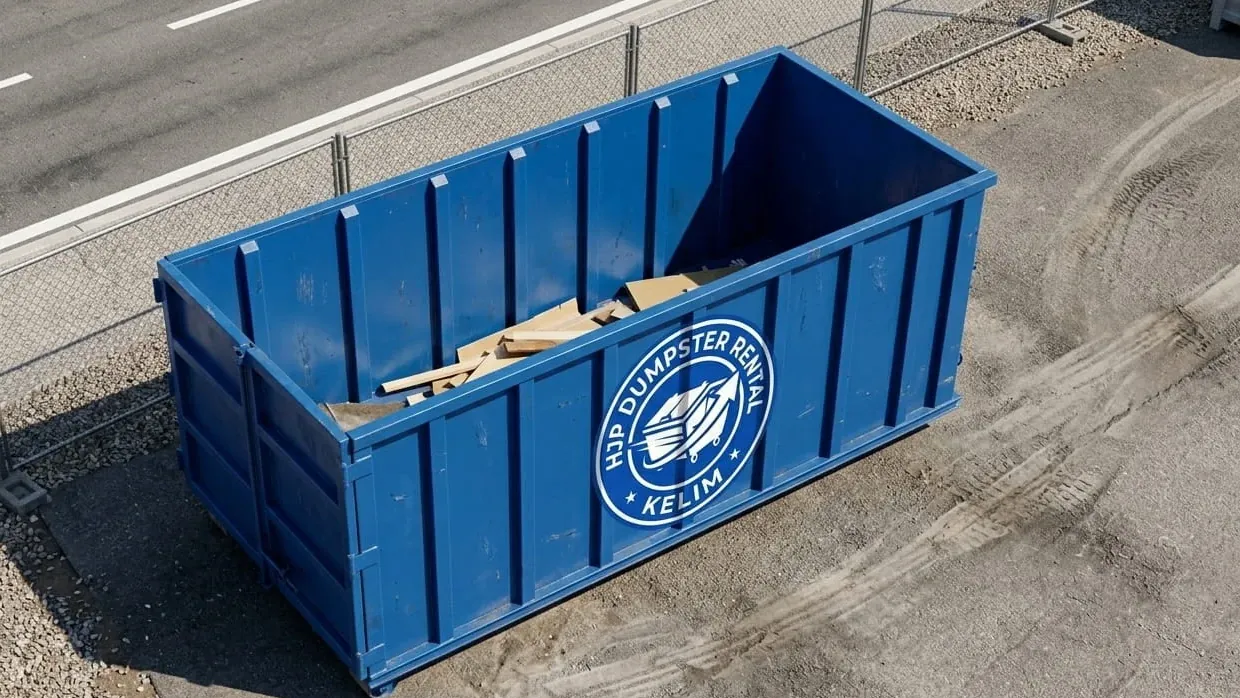
A 10 yard roll-off runs roughly twelve feet long, eight feet wide and about three and a half feet tall — about three pickup loads, with sides low enough that everything goes in over the rim rather than up a ladder. It is not the small container for small jobs. It is the container for heavy jobs, and on this corridor that means masonry, tile, soil and the arisings from a dig that had to go at least thirty inches down for frost.
- Capacity10 cubic yards
- Footprint12 ft x 8 ft x 3.5 ft
- Weight allowance2 – 3 tons
- Holds about~3 pickup truck loads
Why people choose the 10 yard
The 10 exists because weight and volume run out at different times, and on dense material weight runs out first by a very wide margin. Broken concrete, block, brick, cured asphalt, mortar bed, tile, rock and soil all reach a container’s lawful road payload long before they reach its top rail. Put a load of driveway breakout into a 30 and you get a truck that cannot legally leave the property; the only remedy is unloading it by hand, which costs a morning and improves nothing. Put the same material in a 10, loaded flat across the whole floor, and it goes out at a lawful weight the first time. The low sides are the point rather than a compromise — on a masonry job everything is being lifted and dropped in by hand, and a three-and-a-half-foot rim is the difference between a manageable day and a miserable one. It is also the container people book wrongly more often than any other, in both directions: too small when the job is really a household clear-out, and too large when the job is really a slab.
This market produces more heavy material than most, and the reason is published in both counties’ design criteria. Weld County lists a 30-inch frost line for residential and commercial work; Larimer County states a 30-inch minimum frost depth countywide. Footings, water services and sewer laterals all go at least that deep here, so a footing repair, a service replacement, a sewer dig or a set of deck footings turns out considerably more spoil than the same job produces in a warm-winter market. Spoil is the densest thing that comes off a residential property, and it is wetter and heavier again in spring, when the ground has thawed but not dried. Anyone sizing that job by eye will book two sizes too large. The 10 is the right answer, and where there is more than one box worth of it, the right arrangement is two boxes or a booked second pull rather than one bigger container.
There is a second reason to reach for a 10, and it is about keeping a load clean rather than keeping it light. Colorado’s solid waste regulations at 6 CCR 1007-2 define construction and demolition debris, and construction and demolition debris facilities, separately from municipal solid waste landfills, and the facilities serving this area list clean fill and soil, concrete and asphalt as their own accepted categories. A clean masonry load and a mixed load are genuinely different things at the gate. Once broken concrete is mixed into drywall, carpet, cabinetry and packaging it stops being clean masonry, and the whole load travels as mixed debris. So on a job producing both — a bathroom with a thick mortar bed under the tile, a patio coming out alongside a shed, a driveway section next to a garage clear-out — one 10 for the dense clean fraction and a larger box for everything else is very often cheaper than a single container carrying the lot.
The third job for a 10 is the small bounded one where the material happens to be dense: a detached garage or porch roof, a set of concrete steps, a chimney breast, a fence line where every post comes up with its footing still attached. On roofing specifically the 10 covers a small single-layer roof or an outbuilding, and it fits into places the bigger boxes will not — a short driveway, a tight side yard, a lot in one of the newer subdivisions where the setbacks are close. On masonry work the 10 also has a practical advantage that has nothing to do with weight: it can be set close to the work. A patio coming out, a set of steps, a chimney breast being taken down — those are jobs where every piece is carried by hand, and twenty feet of extra carry across a lawn is the difference between an afternoon and a day. Wherever it goes, the same two placement rules apply as to every other container we run. Plywood goes under the wheels and the rear rollers, because a loaded masonry box is heaviest at the moment it is winched back onto the truck and soft ground and ruts are the damage that actually happens in this market. And it sits five feet clear of combustible walls, openings and roof eave lines, because the Town of Johnstown adopts the 2024 International Fire Code and every roll-off is well above the thresholds in both § 304.3.4 and § 304.3.5.
Good fit for
- Broken concrete off a driveway, walk, patio or apron
- Block, brick, stone and chimney masonry
- Tile with a thick mortar bed behind it
- Trench, footing and sewer-dig spoil
- Sod, turf and root balls with soil attached
- A detached garage, porch or outbuilding roof
- Cured asphalt sections and clean fill
- Fence posts pulled with their concrete collars
Not the right size for
- A whole-house clear-out with a basement in it
- Bulky, light material like furniture or packaging
- A full house roof tear-off, which wants a 15 or a 20
- Framing, siding and decking off a demolition
- Storm debris, fencing and limbs
- Any job where the volume, not the weight, is the problem
Will it fit?
At about twelve feet long the 10 fits almost anywhere a car fits, which makes it the container of choice on a short driveway, a tight side yard or a newer subdivision lot with close setbacks. The truck still wants roughly 60 feet of straight approach, about eleven feet of working width and 20 feet of overhead clearance for the hoist, and the overhead is the thing we check first — a service drop or a mature limb over the drop point is the usual obstacle rather than the space itself. Surfaces matter more on this size than any other, because it carries the heaviest loads we haul: plywood goes under the wheels and the rear rollers every time, and we would rather set it on concrete or compacted road base than on a lawn or a graded shoulder, particularly in spring when the ground has thawed and been watered. Ruts and soft ground are the real risk in this market. And like every roll-off we run, it sits five feet clear of combustible walls, openings and combustible roof eave lines under the 2024 International Fire Code as adopted by the Town of Johnstown — § 304.3.4 and § 304.3.5 both apply the same five feet, and every container is above both thresholds.
Before delivery, move cars and bins, mark the septic lid, the drain field and the well head if the house is on its own system, and tell us about fresh concrete, made or filled ground, a shallow irrigation line beside the drive, a street still on base course without its final lift, or a low service drop or shade tree over the only flat spot. A loaded box is several tons carried on four small contact points. Dry ground here takes that; ground that has just had an irrigation set, a cloudburst or a spring thaw ruts under it — so the driveway is the surface, not the lawn, and plywood or timber mats go under every wheel and under both rails as standard. Keep the container five feet clear of combustible walls, openings and combustible roof eave lines. That is the number in the 2024 International Fire Code as adopted by the Town of Johnstown — § 304.3.5 applies it from 1.5 cubic yards with no exception and § 304.3.4 from 1.0 cubic yard with a noncombustible exception, and every roll-off is many times over both, so it is five feet either way. On private property no right-of-way permit is in play at all. If any part of the box has to sit on public ground inside the Town of Johnstown, § 7-35 provides that no person shall place, store or maintain a dumpster on any public property unless expressly authorized in writing by the Town, and placement in violation is considered a nuisance — that is Johnstown’s ordinance and it stops at Johnstown’s town line, so elsewhere ask that town. The numbers are Johnstown 970-587-4664, Weld County Public Works (970) 400-4000, Larimer County Engineering (970) 498-5709. If your own project involves digging — footings, stumps, fence posts, a sewer lateral — call Colorado 811 on 811 or 800-922-1987 first; notice is two business days under C.R.S. Title 9, Article 1.5, not counting the day of notice, and you white-line the dig area before you call. Our delivery and driveway protection guide and our Johnstown placement and permit guide cover the rest.
Compare all five sizes
| Size | Footprint | Weight allowance | Holds about | Best for |
|---|---|---|---|---|
| 10 Yard Dumpster | 12 ft x 8 ft x 3.5 ft | 2 – 3 tons | ~3 pickup truck loads | Broken slab, block, brick and dirt — the box that reaches payload long before it looks full. |
| 15 Yard Dumpster | 16 ft x 8 ft x 4 ft | 2 – 3 tons | ~4 – 5 pickup truck loads | The workhorse for an ordinary single-layer hail tear-off, or one room cleared to the walls. |
| 20 Yard Dumpster | 22 ft x 8 ft x 4.5 ft | 3 – 4 tons | ~6 – 8 pickup truck loads | A whole-house declutter — the default here — a large roof, or a multi-room remodel. |
| 30 Yard Dumpster | 22 ft x 8 ft x 6 ft | 4 – 5 tons | ~9 – 12 pickup truck loads | A large remodel, a basement strip-out or a full estate cleanout. Never roofing. |
| 40 Yard Dumpster | 22 ft x 8 ft x 8 ft | 5 – 6 tons | ~12 – 16 pickup truck loads | Commercial gut jobs and construction — it needs the most room to set down. |
Still not sure? Describe what you are throwing away and we will size it on the phone in two minutes. Getting it wrong costs us more than it costs you, so we have every reason to get it right. Call (970) 427-0341.
Book a 10 yard
Flat rate including delivery, pickup, rental period and disposal. Same-day where we can.
(970) 427-0341Other sizes
Popular services
All sizes
Compare our five roll-off containers
10 Yard Dumpster
Broken slab, block, brick and dirt — the box that reaches payload long before it looks full.
View this size → 15yd³15 Yard Dumpster
The workhorse for an ordinary single-layer hail tear-off, or one room cleared to the walls.
View this size → 20yd³20 Yard Dumpster
A whole-house declutter — the default here — a large roof, or a multi-room remodel.
View this size → 30yd³30 Yard Dumpster
A large remodel, a basement strip-out or a full estate cleanout. Never roofing.
View this size → 40yd³40 Yard Dumpster
Commercial gut jobs and construction — it needs the most room to set down.
View this size →10 Yard Dumpster FAQs
Why is the small box the one for concrete?
Because the binding limit is lawful road weight, not room. Concrete, block, brick, tile, mortar bed, rock and soil are dense enough that a container reaches its payload long before it reaches the top rail. A 30 yard with a foot of broken driveway in the bottom is a truck that cannot legally leave your property, and the fix is unloading it by hand. A 10 loaded flat across the whole floor goes out lawful on the first attempt. The low sides help as well: on a masonry job every piece is lifted in by hand, and a three-and-a-half-foot rim beats climbing a ladder with a slab. If there is more than one box worth of material, we bring a second container or book a second pull rather than a bigger box.
How much spoil comes off a footing or sewer dig here?
More than a newcomer plans for, and both counties publish the reason. Weld County’s design criteria list a 30-inch frost line for residential and commercial work, and Larimer County states a 30-inch minimum frost depth countywide, so footings, water services and sewer laterals are set at least that deep across this market. A trench that would be shallow somewhere warmer is a real excavation here, and spoil is the densest material that comes off a residential site — heavier again in spring when the ground is wet. Plan a 10, load it flat, and expect it to look emptier than it is. Also call 811 or 800-922-1987 at least two business days before you dig, not counting the day of notice, with the dig area white-lined first.
Can I mix a bit of household junk in with the concrete?
A small amount will not stop us taking the load, but it changes where the load can go, so tell us. Colorado’s regulations at 6 CCR 1007-2 treat construction and demolition debris as its own category, and the facilities serving this area list clean fill and soil, concrete and asphalt as their own accepted materials. Mixed into drywall, carpet, cabinetry and packaging, masonry loses that identity and the whole load travels as mixed debris. On a job producing both, one 10 for the clean heavy fraction and a larger container for everything else is usually cheaper than a single box carrying the lot. Call (970) 427-0341 and describe the split and we will tell you whether it is worth it on your job.
Is a 10 enough for a roof?
For a small one, yes. A detached garage, a porch or an outbuilding roof fits a 10 comfortably, and so does a small single-layer roof where the material is nothing but covering. A full house tear-off wants a 15 for an ordinary single layer, or a 20 for a large roof, a two-layer tear-off or a job with decking coming off. What never happens is roofing in a 30 or a 40 — torn shingle reaches a lawful payload long before it fills the box. Size a roof on squares and layers rather than on the size of the house, and call with both numbers. Our hail and tear-off guide works through it properly.
How long do I get it for?
As long as the job needs on private ground — call (970) 427-0341 when you want it collected and we will route it rather than hold you to a fixed day. Heavy jobs tend to be short, so the useful pattern is delivery the day before the breakout starts and collection the day after it finishes. Two local notes. Cover a dusty load before it moves: Front Range Landfill publishes that all incoming loads are subject to random inspection and that uncovered or unsecured loads are charged double. And in spring, remember the ground: the average last frost at Greeley is 12 May and a thawed, watered lot is soft before it is dry, so tell us if the approach is questionable and we will look at it first.
Services
What people put in a 10 yard
Residential Dumpster Rental
Driveway placement for the basement, garage and outbuilding cleanouts a northern Colorado house produces.
Learn more →Commercial Dumpster Rental
Containers for businesses and contractors along the I-25 corridor — neither county collects at the curb.
Learn more →Construction Dumpster Rental
Mixed C&D in one roll-off, with next-day swap-outs across Larimer and Weld.
Learn more →Roofing Dumpster Rental
Weight-rated cans sized by squares and layers — hail tear-off is what this market runs on.
Learn more →Roll-Off Dumpster Rental
10, 15, 20, 30 and 40 yard roll-offs across Larimer and Weld counties.
Learn more →Same-Day Dumpster Rental
Call before the cut-off and we can usually get a container to you this afternoon.
Learn more →Talk to a real person
Need a 10 yard in Kelim?
Tell us what you are clearing out and we will tell you the right size and the flat price to put it in your driveway. No forms, no waiting on an email — just call and we will sort it out in a couple of minutes.
Serving Kelim, Larimer County and Northern Colorado · Mon–Fri 6:30am–5pm, Sat 7am–1pm