
Roofing
Hail Damage and Roof Tear-Off: The Container Guide
Hail is what this market buys containers for. Sizing by squares and layers, the five-foot clearance that lands exactly where the crew wants the box, and the fortnight after a storm.
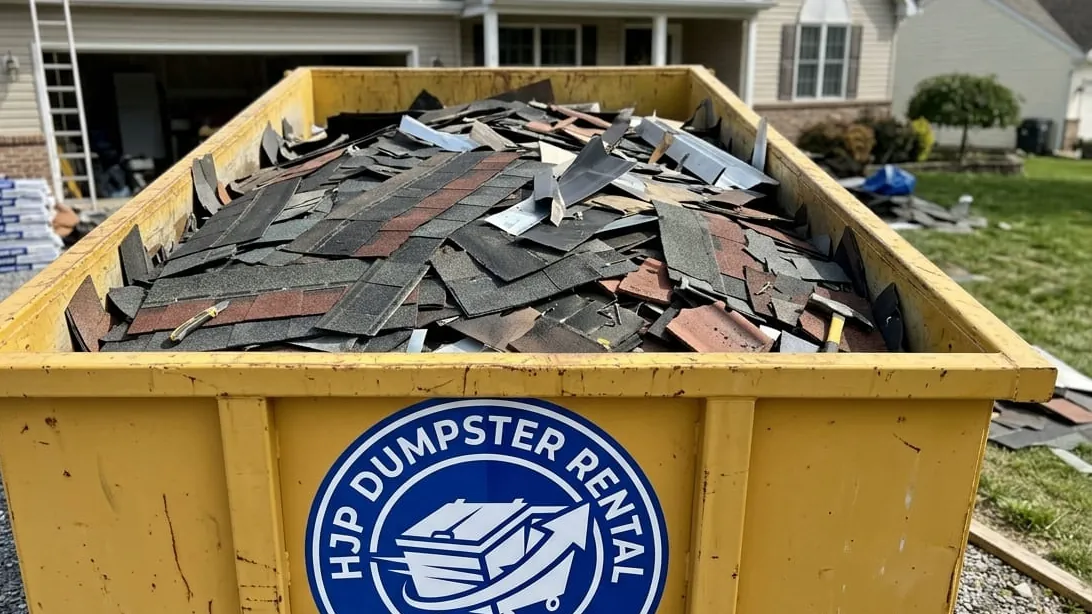
Everything about running containers on this stretch of the Front Range is organized around one weather event. Not rain — this is a semi-arid market that sees about fifteen inches of precipitation in a year. Not snow. Hail.
Northeastern Colorado, which is exactly where Kelim, Johnstown, Milliken, Windsor and Greeley sit, averages seven to nine hail days a year and lies inside what NOAA’s Colorado state climate summary calls the nation’s most hail-prone corridor. That is the single most important commercial fact about this market. Roof tear-off is the job we run more than any other, and it does not arrive evenly — it arrives in bursts, an entire subdivision at a time, in the two weeks after a storm.
This is the guide we wish every homeowner and every roofing crew had before that fortnight starts.
The scale of it, in verified numbers
- Seven to nine hail days a year in northeastern Colorado, in the most hail-prone corridor in the country. (NOAA / NCICS Colorado state climate summary.)
- A May 2017 Denver hailstorm caused insured losses exceeding $2 billion — Colorado’s costliest such event on record. (Same source.)
- In 2025, Colorado ranked sixth in the nation with 244 hail events of one inch diameter or larger, out of a national total of 5,432. (Insurance Information Institute, citing NOAA Storm Prediction Center data.)
- State Farm reported paying more than $3.5 billion in hail claims in 2022, an increase of more than a billion dollars over 2021.
What those figures mean on the ground is simple. Hail on the northern Front Range does not merely dent cars. It destroys roofs at scale, across whole neighborhoods simultaneously, and the debris stream that follows is concentrated into days rather than spread across a season.
The first forty-eight hours
Before anything comes off the roof, three things are worth doing in order.
Document it. Photograph the roof, the gutters, the downspouts, the window screens, the soft metal on vents and flashing, the deck rail, the siding and any hail on the ground while it is still there. Soft-metal bruising is often the most legible evidence a roof took a hit.
Get it looked at before it is torn off. If an adjuster is going to inspect, the roof needs to still be there. It is a common and expensive sequencing mistake to have a crew and a container on site the morning after a storm and the inspection three days later.
Then book the container. Not before. A box sitting on a driveway waiting for an inspection is rental days you are paying for and a container somebody else in the subdivision needs.
The exception is emergency mitigation. Tarping an opening, clearing broken glass and getting water out of a house is immediate work and it generates its own small debris stream. That is a different job from the tear-off and it usually wants a smaller box, or none at all.
Sizing a tear-off — and the one rule that never bends
Roofing never goes in a 30-yard or a 40-yard container.
Not because it will not fit. Because it will not travel. Every roll-off has a lawful road payload as well as a volume, and tear-off debris is dense enough that the load reaches that payload long before the box looks full. A 30-yard container a third full of shingles is a truck that cannot legally leave your driveway, and the only thing that solves it is unloading it by hand.
So we size a roof on two numbers, and neither of them is cubic yards:
- Squares. How many hundred square feet of roof surface. Not the footprint of the house — the roof surface, which on a steep cut-up roof with dormers and hips is a good deal more.
- Layers. One layer or two. A second layer roughly doubles the debris, and on 1990s and older houses in this market two layers are common.
Give us those two numbers and the container is a two-minute decision. For most residential roofs on this corridor the answer is a 15-yard or a 20-yard. Where the roof is large or double-layered, the right answer is usually one container plus a scheduled second pull, arranged before the crew starts, rather than a bigger box that cannot be hauled full.
What else comes off with the shingles and needs counting: underlayment and felt, ice and water shield, drip edge, valley and step flashing, ridge vent, pipe boots, any damaged decking, and often the gutters. Decking in particular is a step change — a roof with soft sheathing coming off is a materially bigger load than a straight strip.
See our roofing dumpster service and the general sizing guide.
Where the box goes, and the five-foot problem
Here is a conflict specific to roofing, and it catches people out.
The place a roofing crew wants the container is directly under the eave, so the debris goes over the edge and into the box. The fire code says that is exactly where it cannot go.
The Town of Johnstown adopts the 2024 International Fire Code. Under § 304.3.5, dumpsters and containers with an individual capacity of 1.5 cubic yards or more shall not be stored in buildings or placed within five feet of combustible walls, openings or combustible roof eave lines. The adjacent § 304.3.4 applies the same five-foot rule at 1.0 cubic yard, with an exception where the container itself is built of noncombustible or low heat release material. Every roll-off container is far above both thresholds, so the answer never changes: five feet, always, and the eave line counts.
The practical workarounds are ordinary. Set the box on the driveway five feet clear and run a plywood or tarp chute to it. Set it along a gable end rather than under an eave. On a big cut-up roof, move it once mid-job rather than fight the geometry from one position. None of that is difficult if it is planned at delivery instead of discovered at nine in the morning.
Front Range Fire Rescue provides life safety services to Johnstown, Milliken and Weld County and will answer a placement question: 970-587-4464, frfr.colorado.gov. Note that in unincorporated Weld County the county itself enforces no fire code — its ordinance provides that the International Fire Code applies only when adopted by a local fire district. The district is the authority out there, not the county.
On placement permission: on a driveway or a private lot, no right-of-way permit is in play. If any part of the container has to sit on public property inside the Town of Johnstown, § 7-35 is explicit — no person shall place, store or maintain a dumpster on any public property unless expressly authorized in writing by the Town. The Town is at 970-587-4664, and our permits guide has the rest.
Protecting what is underneath
A loaded roofing container is one of the heaviest things that will ever sit on a residential driveway, and shingle debris is loaded from height, which means impact as well as weight.
Plywood under the wheels and under the rear rollers is standard on our deliveries. It spreads the point loads and it protects the surface at the two places that actually get damaged. On a new-construction pad or a soft graded shoulder it matters more, not less — the finished driveway is usually the strongest thing on the lot. Our driveway protection guide covers the details.
Then there is the landscape. Tarps down the wall line, over the shrubs and across the beds, before the first bundle moves. And nails: a magnet sweep of the drive, the lawn and the gutter line at the end of every day, not just at the end of the job. Tire punctures a week after a re-roof are the most common complaint homeowners have about roofing work, and they are entirely preventable.
Wind, and why the load gets covered
This is Colorado’s other structural weather fact, and it directly affects a loaded container.
Chinook downslope windstorms are a recurring Front Range hazard. NOAA has documented Front Range gusts as high as 137 mph in the January 1982 event, and while the plains east of the foothills get a diminished version of what the foothills get, the design numbers tell you it is taken seriously: Weld County publishes a 115 mph basic residential wind speed, and Larimer County publishes site-specific basic wind speeds ranging from 115 to 225 mph.
Shingle debris is heavy but underlayment, felt, wrappers and insulation are not, and an open-top container in a wind event is a distribution system for them. Two reasons to cover a load, both concrete:
- It is your neighbors’ yards, the ditch and the road if you do not.
- Front Range Landfill publishes that all incoming loads are subject to random inspection and that all uncovered or unsecured loads will be charged double.
Tarp it, net it, or load the top course heavy. It is the cheapest thing on the job.
The older roofs, and the question to settle first
Most of this market is new. Johnstown’s median year built is 2007, 71.8 percent of its housing dates from 2000 or later, and only about one home in ten predates 1980. Practically, that means a very large share of the roofs coming off here are asphalt shingle over 2000s-era decking, which is the straightforward case.
The older stock is small and concentrated — the historic Parish Avenue and Main Street core and the equivalent older blocks in the neighboring towns. On a pre-1989 building, settle the asbestos question before a crew is booked. Colorado handles asbestos through CDPHE’s Air Pollution Control Division under Regulation 8, Part B, requires an inspection by a certified asbestos building inspector before renovation or demolition, and requires a ten working-day notification for any demolition activity regardless of size. Single-family trigger levels are 32 square feet or 50 linear feet. Buildings constructed after 12 October 1988 with documentation confirming no asbestos-containing materials are exempt. CDPHE asbestos: 720-507-5136, cdphe.colorado.gov. Asbestos-containing material never goes in a rented container.
The rest of the storm debris
Hail rarely arrives alone. The same systems bring wind, and the county across the line has a distinction most people do not know about: Weld County has recorded more tornadoes than any other county in the United States, with 252 confirmed sightings between 1950 and 2011. Most of those are short-lived landspouts forming along the Denver Convergence Vorticity Zone rather than the long-track supercell tornadoes of the southern plains — that mechanism is why the count is so extraordinary without the county being notorious.
But the exception matters locally. The Windsor tornado of 22 May 2008 destroyed 78 homes, about five and a half miles from Kelim. That is in-market, in living memory, and it is the reason storm debris here means fence sections, siding, soffit, sheds, deck boards, downed limbs and insulation as well as shingles.
Mixed storm debris is bulky rather than dense, so the sizing logic inverts — a 30-yard is often right for a yard full of fencing and limbs even though it would be wrong for the roof. Watch for the two things that cannot go in: anything electronic, banned from Colorado landfills since 1 July 2013, and any tires. See our storm debris guide.
For watches and warnings, the correct forecast office for both Weld and Larimer counties is NWS Denver/Boulder.
Scheduling in the fortnight after a storm
Be honest about what happens after a significant hail event: every roofer in the county is bidding the same neighborhood, and every one of them wants a container the same morning. That is the hardest two weeks of the year to get anything delivered anywhere in Northern Colorado, and the pressure is worse because the market is growing fast — Johnstown issued 528 single-family permits in 2025 and grew from 17,303 residents in 2020 to an estimated 22,433 by mid-2025, so the same trucks are already committed.
What actually works:
- Book the box when the contract is signed, not the night before the crew starts.
- Schedule the second pull in advance on any roof that will need one. A crew standing still costs more per hour than any container.
- Tell us the placement constraint at booking — the eave line, the gate, the low branch, the neighbor’s parked trailer. Placement problems discovered on arrival are the main cause of a missed morning.
- Give us the address, not the town. In Johnstown, the address decides which county you are in, and that decides who the road authority is. Our county-line guide explains it.
We have been running containers out of our yard on the Kelim frontage road since 2013, through more than a few of these fortnights. Call HJP Dumpster Rental at (970) 427-0341 with the squares and the layers, and we will have the right box on the drive before the crew arrives. Service areas · sizes · FAQ.
Questions this guide did not answer? Call (970) 427-0341. We would rather spend two minutes on the phone than have you order the wrong container.