Construction
Construction Debris Disposal in Colorado: A Local Guide
Colorado has no statewide residential building code, so every sentence that starts the code says has to name a jurisdiction. Here is what a build on the Larimer-Weld line has to settle first.
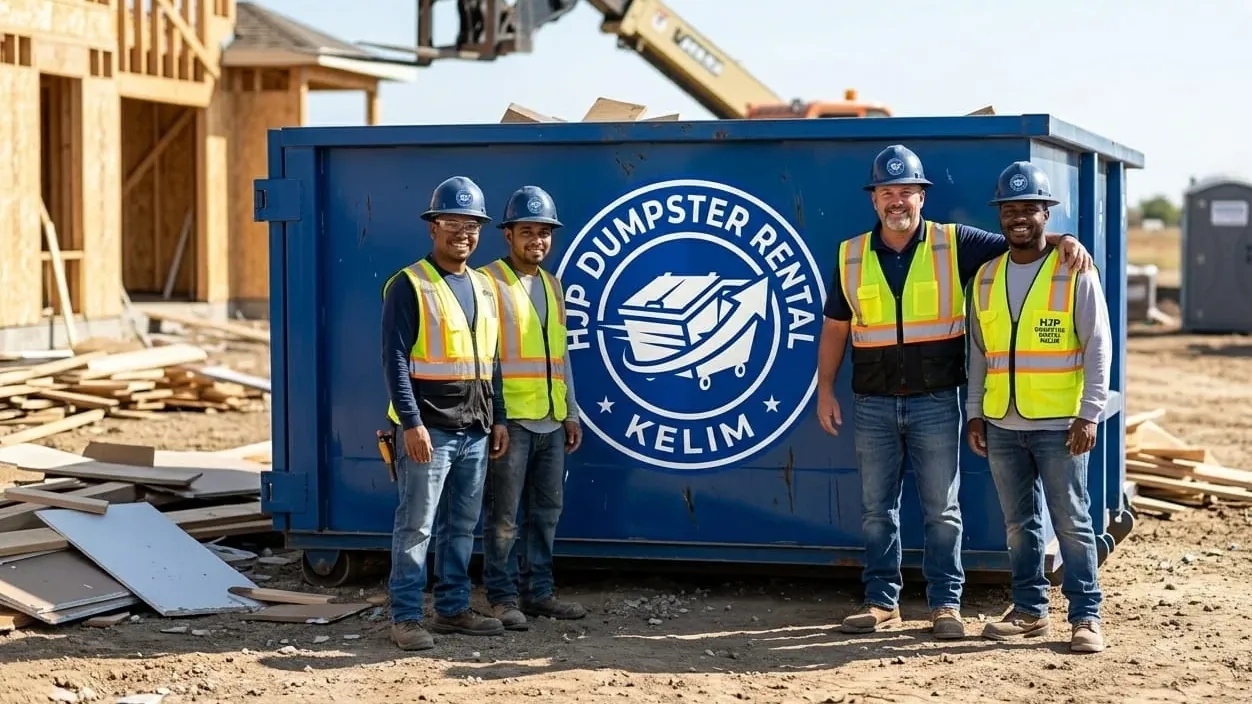
There is one sentence that has to come first, because everything else on this page depends on it. Colorado has no statewide residential building code. Adoption is entirely local. Each home rule municipality, each statutory town and each county adopts its own editions on its own timetable, and within a few miles of Kelim the results genuinely differ.
So any sentence that begins “the code says” is incomplete here until it names a jurisdiction. That is not pedantry. It is the difference between a job that passes and a job that does not.
Three governments, three code packages, three effective dates
- Town of Johnstown (home rule) — Chapter 18 of the Town code adopts the 2024 International Residential Code, along with the 2024 building, mechanical, plumbing, energy conservation, fuel gas, property maintenance, existing building and swimming pool codes, the National Electrical Code, the Colorado Model Electric and Solar Ready Code, and the 2024 International Fire Code at § 18-61.
- Weld County (unincorporated) — 2024 IBC, IEBC, IRC, IMC, IPC, IFGC, IECC, IPMC and ISPSC with the 2023 NEC, effective 15 June 2026. The list contains no fire code at all.
- Larimer County (unincorporated) — 2024 IRC, IBC, IECC, IPC and IMC with the 2025 NEC and the 2025 Colorado Wildfire Resiliency Code, effective 1 January 2026. Larimer also notes that structures built after 1 January 1972 required a building permit, except as noted.
Kelim is unincorporated and in Larimer County. Old-town Johnstown is on the Weld side. A job a mile apart from another job can be under two different packages with two different effective dates, and our county-line guide exists because that is a daily reality here, not a curiosity.
Contacts: Weld County Building, 1150 O Street, Greeley, (970) 400-4000, weld.gov. Larimer County Community Development, 200 W. Oak Street, Fort Collins, (970) 498-7000, larimer.gov. Town of Johnstown, 450 S. Parish Avenue, 970-587-4664, johnstownco.gov.
Two questions to settle before the demolition starts
Both of these are legally significant, both are time-consuming, and both are cheaper to answer before a crew is on site than after.
Asbestos — and in Colorado it is an air quality matter
Colorado regulates asbestos abatement through CDPHE’s Air Pollution Control Division under Regulation 8, Part B. Not solid waste. Air quality. Contractors arriving from states where asbestos lives with the environmental agency’s land division get this wrong routinely.
The trigger levels for a single-family residential dwelling are 32 square feet of surface area, 50 linear feet of pipe, or the volume equivalent of a 55-gallon drum. For public and commercial buildings it is 160 square feet or 260 linear feet. Read those numbers again if you have worked in a state that applies only the commercial figures — 32 square feet is a small bathroom floor, and in Colorado that is a permit-level job in a house.
A ten working-day notification is required before work commences, both for abatement above the trigger levels and for any demolition activity regardless of size. An inspection by a certified asbestos building inspector is required before renovation or demolition. There is one exemption: buildings constructed after 12 October 1988 with documentation confirming no asbestos-containing materials were used.
Published fees include $60 for a single-family residential notice, $180 for a single-family residential 30-day permit, $400 for a public or commercial 30-day permit, and a demolition notice at $50 plus $5 per 1,000 square feet. CDPHE asbestos: 720-507-5136, cdphe.colorado.gov.
Asbestos-containing material never goes in a rented container. WM’s North Weld Landfill refuses friable asbestos outright, and abatement waste is a regulated stream handled by certified contractors under a separate process.
Lead — and Colorado is not an EPA-authorized state
The federal Renovation, Repair and Painting rule applies to compensated renovation, repair or painting that disturbs painted surfaces in housing or child-occupied facilities built before 1978. Some states run the program themselves under EPA authorization. Colorado is not one of them. Firms certify with EPA directly, and individual renovators take EPA-accredited renovator training.
Here is the local nuance, and it is genuinely useful. Most of this market is far too new for lead paint. In Johnstown the median year a home was built is 2007, 71.8 percent of the housing stock dates from 2000 or later, and only about one home in ten predates 1980. The pre-1978 stock is small and it is concentrated — in the historic Parish Avenue and Main Street core, the Great Western Sugar-era housing, and the older parts of the neighboring towns.
So the practical rule on this corridor: a 2006 subdivision remodel is not an RRP job. A gut of a beet-era house four blocks off Parish Avenue quite possibly is, and it may be an asbestos job as well.
Digging, and the number that is two
Colorado’s excavation law is C.R.S. Title 9, Article 1.5. It requires notice of the commencement, extent and duration of excavation work “at least two business days prior thereto not including the day of actual notice.” Markings remain valid while clearly visible, but not more than thirty calendar days after the locate request’s due date; work running past that needs re-notification.
Colorado 811 advises allowing three business days, which is prudent padding rather than the statutory minimum. Before you call, white-line the dig area with paint, flags or stakes. 811 or 800-922-1987.
There is a reason to be scrupulous about this here that does not apply in most markets. Weld County produces the large majority of Colorado’s oil and gas, and rural and edge-of-town properties across this area can carry flowlines, gathering lines and tank battery services that no homeowner has any reason to know about. The regulator is the Colorado Energy and Carbon Management Commission, ecmc.colorado.gov, (303) 894-2100.
The thirty-inch frost line, and what it does to a debris estimate
Weld County publishes a 30-inch frost line depth for residential and commercial work alike. Larimer County publishes a 30-inch minimum frost depth countywide. Two counties, two methods, same number.
Footings, water services and sewer laterals all sit below that line. So every trench on a job here is deeper than the same trench in a mild climate, and every extra inch is spoil. Excavated soil is among the heaviest material anyone loads into a container, which is why a trench job gets a small box with a weight allowance rather than a large one. Our sizing guide walks through the trade-off, and concrete and heavy debris is the service line for it.
Two more published design figures, which we will attribute rather than blend, because they come from different counties applying different methods to nearly the same ground. Weld County publishes a flat 30 psf ground snow load and a 115 mph basic residential wind speed. Larimer County publishes ground snow load varying by elevation, 55 psf at 5,000 feet, and basic wind speeds ranging from 115 to 225 mph depending on the site. Kelim sits at 4,938 feet, right at the bottom of the Larimer scale.
Where construction debris actually goes from here
Colorado’s regulation defines “Construction and Demolition Debris” as waste generated from construction, remodeling, repairs or demolition of buildings, including lumber, bricks and drywall, and it defines a “Construction and Demolition Debris Facility” separately from a municipal solid waste landfill.
But no C&D-only facility appears on the Weld or Larimer county facility lists. Locally, C&D goes to general landfills that also accept it:
- WM North Weld Landfill, 40000 WCR 25, Ault — C&D, MSW, industrial waste and yard waste accepted; friable asbestos, hazardous waste, e-waste, tires, bulk liquids and radioactive materials refused.
- Waste Connections Front Range Landfill, 1830 WCR 5, Erie — construction debris, concrete and asphalt, clean fill and soil accepted; e-waste, tires, batteries, liquids, refrigerators and freezers refused. All incoming loads subject to random inspection, and uncovered or unsecured loads charged double.
- WM Buffalo Ridge Landfill, 11655 WCR 59, Keenesburg — C&D accepted; e-waste, tires, lead-acid batteries, bulk liquids and hazardous waste refused.
- Larimer County Central Diversion and Transfer Station, 2388 W. Trilby Road, Fort Collins, (970) 498-5772.
Every Colorado landfill operates under a Certificate of Designation issued by the county under C.R.S. § 30-20-102, with CDPHE review. Disposal capacity in this state is a county-level permission. Full detail in our Colorado disposal rules guide.
Segregate at the point of generation, not at the gate
Mixed loads cost more and travel worse. The separations that pay on a Northern Colorado job site:
- Clean concrete, brick, block and asphalt in their own container. Clean masonry is straightforward; masonry salted with lumber and trash is not.
- Clean soil and fill separate from construction debris.
- Metal pulled out for scrap, if the volume justifies handling it.
- Anything with a cord or a screen out of the container entirely — electronics have been banned from Colorado landfills since 1 July 2013.
- Tires, batteries, paint, solvents, aerosols, propane cylinders out entirely. Weld County’s household hazardous waste facilities, (970) 400-2217, handle the residential side of that list.
- Refrigerant-bearing equipment out entirely — it needs professional coolant removal before a scrapyard will accept it.
Site logistics on the high plains
Kelim sits at 4,938 feet on flat irrigated farmland at the foot of the range. It is high, but it is not mountains, and the trucking is section-line county roads and a four-lane interstate rather than switchbacks. What does bite is ground and wind.
Ground. Driveways and finished pads are fine. The graded shoulder beside them, the unpaved side of a new lot, and any surface that has just taken water are a different matter. Plywood under the wheels and the rear rollers is standard practice on our trucks and it is the difference between a delivery and a rut you pay to repair. Our driveway protection guide covers it.
Wind. Chinook downslope windstorms are a documented Front Range hazard, with NOAA-recorded gusts on the Front Range as high as 137 mph, and Weld County publishes a 115 mph basic residential design wind. Loose material in an open-top container does not stay there. Tarp, net, or load so the top course is heavy — and remember the double charge for uncovered loads at Front Range Landfill.
Season. The average last spring frost at Greeley is 12 May and the first fall frost is around 8 October. Exterior work and site demolition really start in May here. Snow and ice change where a container can be safely set and picked up in winter.
Burning is not the cheap alternative
In farm country the reflex is a burn pile. Front Range Fire Rescue’s adopted fire code amendments address exactly this: open burning is prohibited when atmospheric conditions or local circumstances make such fire hazardous, a permit is required, and bonfires are separately regulated. The Town of Johnstown’s own fire code amendments do the same and add a prohibition on sky lanterns. Front Range Fire Rescue: 970-587-4464, frfr.colorado.gov.
Burying it is not the cheap alternative either. Weld County requires a landowner disposing of their own waste on their own property to submit a design and operations report to the county and to CDPHE for review and approval first.
New construction is a service line here, not an afterthought
Johnstown issued 528 single-family permits in 2025, with multifamily bringing the residential total to more than 900, plus 18 commercial permits. The town grew from 17,303 residents at the 2020 census to an estimated 22,433 by mid-2025, and was among the fastest-growing towns in the country in that period. That volume of framing scrap, packaging, drywall offcuts and site trash is a steady, year-round stream, not a seasonal one.
For a build, that usually means a 30-yard on site through framing and drywall, a 10-yard for any masonry or spoil phase, and scheduled swaps rather than call-when-full. See construction dumpster rental and demolition debris.
One more thing, while the basement is open
Basements are ordinary in this market, and a basement remodel is a sensible moment to test for radon. EPA’s own guidance is the right framing: homes with elevated levels of radon have been found in all three zones, and all homes should be tested, regardless of zone designation.
Call HJP Dumpster Rental at (970) 427-0341 with the address, the phase and the material, and we will put the right box on the right pad. Service areas · sizes · FAQ.
Questions this guide did not answer? Call (970) 427-0341. We would rather spend two minutes on the phone than have you order the wrong container.