
One bounded job
15 Yard Dumpster Rental in Kelim, CO
The container for a job with a clear edge on it — one bathroom, one kitchen, one bay of a basement, one ordinary single-layer roof. It is also the size that takes a heavy load better than most people expect, which makes it the sensible step up from the weight box.
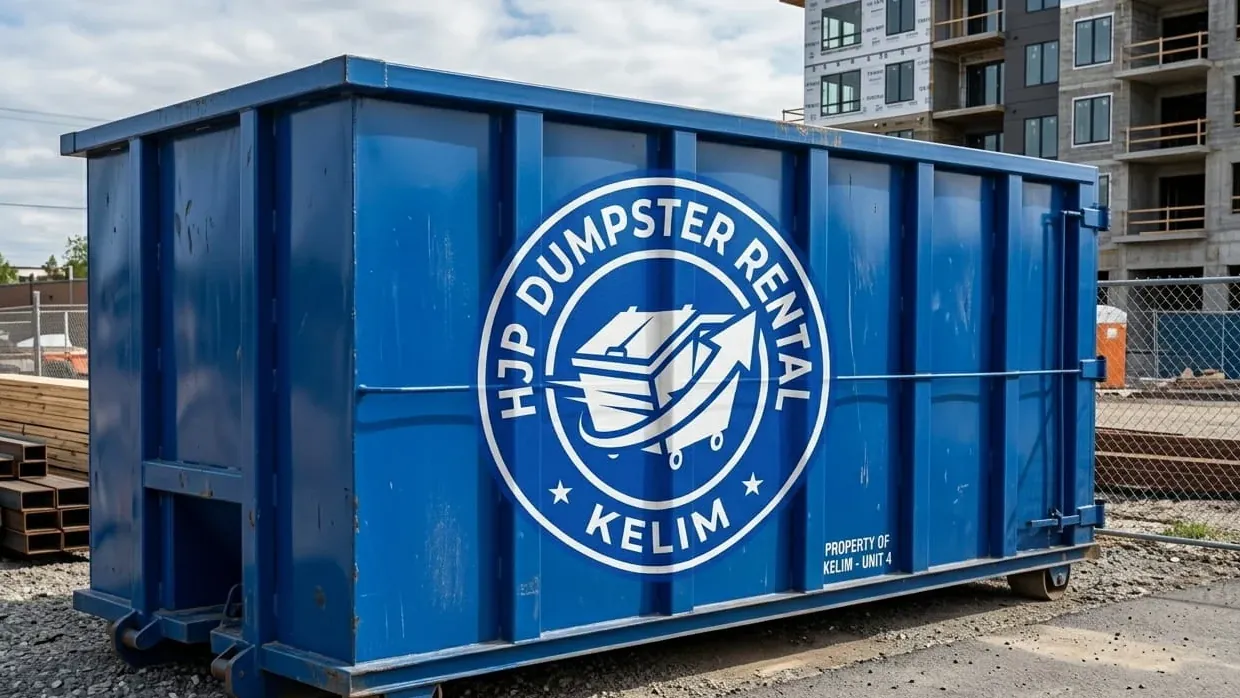
A 15 yard roll-off runs about sixteen feet long, eight feet wide and roughly four feet tall — four or five pickup loads, with sides still low enough to load over rather than climb. On this corridor it does two quite different jobs: it is the container for a bounded interior job, and it is the workhorse for an ordinary single-layer asphalt tear-off after hail.
- Capacity15 cubic yards
- Footprint16 ft x 8 ft x 4 ft
- Weight allowance2 – 3 tons
- Holds about~4 – 5 pickup truck loads
Why people choose the 15 yard
The 15 exists for the job that is genuinely finished when it is finished. One bathroom taken out to the studs. One kitchen with cabinets, counters and flooring. One bedroom back to bare walls. One bay of a basement cleared properly rather than shuffled. Those jobs have a known volume, and a 15 absorbs them without leaving half a container standing empty on a driveway for a week. It is also the size most often sized correctly over the phone, because a bounded job is easy to describe: tell us the room and what is coming out of it and we can call it in a sentence. Where people go wrong is treating a bounded job as the first stage of an unbounded one — if the bathroom is step one of a whole-floor remodel, take the 20 at the start rather than paying for a second haul in week three. The low sides matter too. On a job where one or two people are doing all the carrying, loading over the rim instead of up a ladder is worth more than any figure on a specification sheet.
It is also the roofing container on this corridor, and roofing is what this market buys containers for. NOAA’s Colorado state climate summary puts northeastern Colorado at seven to nine hail days a year, inside what it calls the nation’s most hail-prone corridor, and hail here does not damage one roof, it damages a subdivision. An ordinary single-layer asphalt tear-off on a house in this market fits a 15 comfortably, and the reason it is not a bigger box is payload rather than room. Roof covering is dense, it does not compress, and a tear-off delivers the entire weight of the roof in a single afternoon — shingle, felt, ice-and-water shield, drip edge, flashing, ridge vent and often the gutters, with any damaged decking on top of that. A 15 loaded flat and low goes out at a lawful weight, and a roofing container that looks half full is very often already there. Two layers, a large roof, or decking coming off with the shingle usually means a 20 or a booked second pull instead. What never happens is roofing in a 30 or a 40.
The third job the 15 does here is the basement bay, and it is a job the warm-weather markets simply do not have. Both Weld and Larimer counties publish a 30-inch frost line, so footings, water services and sewer laterals go at least that deep as a matter of course — and once you are digging thirty inches for frost, the marginal cost of a full basement is small. Basements are ordinary here as a result. Clearing one is rarely a single continuous effort; it is a section at a time, over several weekends, at the pace of a stair carry, and a 15 fills at about that rate. It also matches the geometry: set it near the walkout or the lower-level garage door with the tailgate facing the opening and the second half of every load becomes a flat carry instead of a stair carry. If the whole basement plus the garage plus the storage level is going out in one push — which is the common job in this market — that is a 20 or a 30 instead.
The last consideration is what the box is allowed to hold and where it is allowed to sit, and here the local rules are narrower than people assume but absolute where they exist. Electronics have been banned from Colorado landfills since 1 July 2013 under C.R.S. § 25-17-303 and are refused at every local gate, so a monitor or a television is a gate problem rather than a surcharge. Tires are refused locally and routed to registered tire facilities under Colorado’s waste tire rules. Liquids, paint, fuel, solvents, pressurized tanks, batteries and anything containing asbestos never go in. Beyond that, what a Colorado landfill accepts is largely set facility by facility in its own approved operating plan rather than by a single statewide list, which is why we ask what is in the load. And the placement rule does not vary by size: five feet clear of combustible walls, openings and roof eave lines, under the 2024 International Fire Code as adopted by the Town of Johnstown at both § 304.3.4 and § 304.3.5.
Good fit for
- One bathroom stripped to the studs
- One kitchen: cabinets, counters, flooring and appliances
- An ordinary single-layer asphalt tear-off after hail
- One bay of a basement cleared properly
- A bedroom or living room taken back to bare walls
- Carpet and flooring out of two or three rooms
- A deck, porch or small outbuilding coming off
- Heavy loads that are dense but not purely masonry
Not the right size for
- A whole house going out after a long tenure
- A basement, garage and storage level cleared in one push
- Multi-room remodels running over several weeks
- Large commercial build-outs and warehouse clear-downs
- Pure clean masonry, which belongs in a 10 loaded flat
- Lot clearing and large-scale storm debris
Will it fit?
At about sixteen feet long the 15 still behaves like a small container on a lot in this market. It fits an ordinary driveway with room to get past, and its sides are low enough that most material goes in over the rim rather than up a ladder, which matters on a job where one or two people are doing all the carrying. The truck wants roughly 60 feet of straight approach, about eleven feet of working width and 20 feet of overhead clearance for the hoist, and the overhead is what we check first — a service drop or a mature limb over the drop point is the usual obstacle. On the sloped driveways that come with walkout basements around here, we will look at where the container can sit level and still face the opening. Surfaces: plywood under the wheels and the rear rollers on every delivery, with a preference for concrete or road base over a lawn or a graded shoulder, because soft ground and ruts are the damage that actually happens on this corridor. And the container sits five feet clear of combustible walls, openings and combustible roof eave lines, as the 2024 International Fire Code adopted by the Town of Johnstown requires — which on a roofing job means it goes near the eave, not under it.
Before delivery, move cars and bins, mark the septic lid, the drain field and the well head if the house is on its own system, and tell us about fresh concrete, made or filled ground, a shallow irrigation line beside the drive, a street still on base course without its final lift, or a low service drop or shade tree over the only flat spot. A loaded box is several tons carried on four small contact points. Dry ground here takes that; ground that has just had an irrigation set, a cloudburst or a spring thaw ruts under it — so the driveway is the surface, not the lawn, and plywood or timber mats go under every wheel and under both rails as standard. Keep the container five feet clear of combustible walls, openings and combustible roof eave lines. That is the number in the 2024 International Fire Code as adopted by the Town of Johnstown — § 304.3.5 applies it from 1.5 cubic yards with no exception and § 304.3.4 from 1.0 cubic yard with a noncombustible exception, and every roll-off is many times over both, so it is five feet either way. On private property no right-of-way permit is in play at all. If any part of the box has to sit on public ground inside the Town of Johnstown, § 7-35 provides that no person shall place, store or maintain a dumpster on any public property unless expressly authorized in writing by the Town, and placement in violation is considered a nuisance — that is Johnstown’s ordinance and it stops at Johnstown’s town line, so elsewhere ask that town. The numbers are Johnstown 970-587-4664, Weld County Public Works (970) 400-4000, Larimer County Engineering (970) 498-5709. If your own project involves digging — footings, stumps, fence posts, a sewer lateral — call Colorado 811 on 811 or 800-922-1987 first; notice is two business days under C.R.S. Title 9, Article 1.5, not counting the day of notice, and you white-line the dig area before you call. Our delivery and driveway protection guide and our Johnstown placement and permit guide cover the rest.
Compare all five sizes
| Size | Footprint | Weight allowance | Holds about | Best for |
|---|---|---|---|---|
| 10 Yard Dumpster | 12 ft x 8 ft x 3.5 ft | 2 – 3 tons | ~3 pickup truck loads | Broken slab, block, brick and dirt — the box that reaches payload long before it looks full. |
| 15 Yard Dumpster | 16 ft x 8 ft x 4 ft | 2 – 3 tons | ~4 – 5 pickup truck loads | The workhorse for an ordinary single-layer hail tear-off, or one room cleared to the walls. |
| 20 Yard Dumpster | 22 ft x 8 ft x 4.5 ft | 3 – 4 tons | ~6 – 8 pickup truck loads | A whole-house declutter — the default here — a large roof, or a multi-room remodel. |
| 30 Yard Dumpster | 22 ft x 8 ft x 6 ft | 4 – 5 tons | ~9 – 12 pickup truck loads | A large remodel, a basement strip-out or a full estate cleanout. Never roofing. |
| 40 Yard Dumpster | 22 ft x 8 ft x 8 ft | 5 – 6 tons | ~12 – 16 pickup truck loads | Commercial gut jobs and construction — it needs the most room to set down. |
Still not sure? Describe what you are throwing away and we will size it on the phone in two minutes. Getting it wrong costs us more than it costs you, so we have every reason to get it right. Call (970) 427-0341.
Book a 15 yard
Flat rate including delivery, pickup, rental period and disposal. Same-day where we can.
(970) 427-0341Other sizes
Popular services
All sizes
Compare our five roll-off containers
10 Yard Dumpster
Broken slab, block, brick and dirt — the box that reaches payload long before it looks full.
View this size → 15yd³15 Yard Dumpster
The workhorse for an ordinary single-layer hail tear-off, or one room cleared to the walls.
View this size → 20yd³20 Yard Dumpster
A whole-house declutter — the default here — a large roof, or a multi-room remodel.
View this size → 30yd³30 Yard Dumpster
A large remodel, a basement strip-out or a full estate cleanout. Never roofing.
View this size → 40yd³40 Yard Dumpster
Commercial gut jobs and construction — it needs the most room to set down.
View this size →15 Yard Dumpster FAQs
Is a 15 big enough for a kitchen?
For a standard kitchen rip-out, yes, comfortably in most cases. Cabinets, counters, a wall oven or range, sheet flooring or tile, backer board and the soffit above the wall run will fit a 15 with room to spare — unless the floor is tile set in a thick mortar bed, in which case the weight arrives before the volume does and we would rather bring a 10 for the tile and a second box for the rest. The question we ask is whether the kitchen is the whole job or the first part of one. If the flooring is being replaced through the rest of the house afterward, or walls are coming out, take a 20 at the start rather than paying for a second haul later.
What size do I need for a roof?
For an ordinary single-layer asphalt tear-off on a house on this corridor, a 15 is the usual answer. A detached garage, porch or outbuilding roof fits a 10. A large roof, a two-layer tear-off, or a job with decking coming off with the shingle usually wants a 20 or a booked second pull. We do not put roofing in a 30 or a 40, because torn shingle reaches a lawful road payload long before it fills the box. Size it on squares and layers rather than on the size of the house, and be aware that the container will sit five feet off the eave line under the 2024 International Fire Code as adopted by Johnstown rather than directly beneath it — a plywood chute closes the gap.
Can I use it for a basement cleanout?
For a section of a basement, yes, and it is a good match for the pace. Clearing a basement here is usually a stair carry done over several weekends rather than one continuous push, and a 15 fills at about that rate. Set it near the walkout or the lower-level garage door with the tailgate facing the opening and the second half of every load becomes a flat carry. If the whole basement plus the garage plus the storage level is going out in one push — the common job in this market, because 30-inch frost depths in both counties make basements ordinary — step up to a 20, or a 30 if the house is being emptied completely. Our basement cleanout guide works through the sequence.
Can I mix concrete in with it?
A small amount will not stop us taking the load, but it changes where the load can go, so tell us. Colorado’s regulations at 6 CCR 1007-2 treat construction and demolition debris as its own category, and the facilities serving this area list clean fill and soil, concrete and asphalt among their accepted materials as separate categories. Mixed into drywall, cabinetry and flooring, masonry loses that identity and the whole load travels as mixed debris. On a job producing both, one 10 for the masonry loaded flat and one 15 for everything else is normally cheaper than a single container carrying the lot — and it is a great deal easier to load.
How long do I get it for?
As long as the job needs on private ground — call (970) 427-0341 when you want it collected and we will route it rather than hold you to a fixed day. On a bounded job the useful pattern is delivery the day before work starts and collection the day after it finishes. Two local notes. Cover the load before it moves: chinook downslope winds are a genuine Front Range hazard, Weld County publishes a 115 mph basic residential wind speed, and Front Range Landfill publishes that uncovered or unsecured loads are charged double. And in the fortnight after a significant hail event, containers are scarce across the whole corridor — book ahead of that window if you can.
Services
What people put in a 15 yard
Residential Dumpster Rental
Driveway placement for the basement, garage and outbuilding cleanouts a northern Colorado house produces.
Learn more →Commercial Dumpster Rental
Containers for businesses and contractors along the I-25 corridor — neither county collects at the curb.
Learn more →Construction Dumpster Rental
Mixed C&D in one roll-off, with next-day swap-outs across Larimer and Weld.
Learn more →Roofing Dumpster Rental
Weight-rated cans sized by squares and layers — hail tear-off is what this market runs on.
Learn more →Roll-Off Dumpster Rental
10, 15, 20, 30 and 40 yard roll-offs across Larimer and Weld counties.
Learn more →Same-Day Dumpster Rental
Call before the cut-off and we can usually get a container to you this afternoon.
Learn more →Talk to a real person
Need a 15 yard in Kelim?
Tell us what you are clearing out and we will tell you the right size and the flat price to put it in your driveway. No forms, no waiting on an email — just call and we will sort it out in a couple of minutes.
Serving Kelim, Larimer County and Northern Colorado · Mon–Fri 6:30am–5pm, Sat 7am–1pm