Roll-off
Roll-Off Dumpster Rental in Kelim, CO
Open-top containers from 10 to 40 yards, delivered along the I-25 corridor and across the Larimer–Weld line. One truck, one box, one price conversation on the phone — and an honest answer about which county desk you need before you need it.
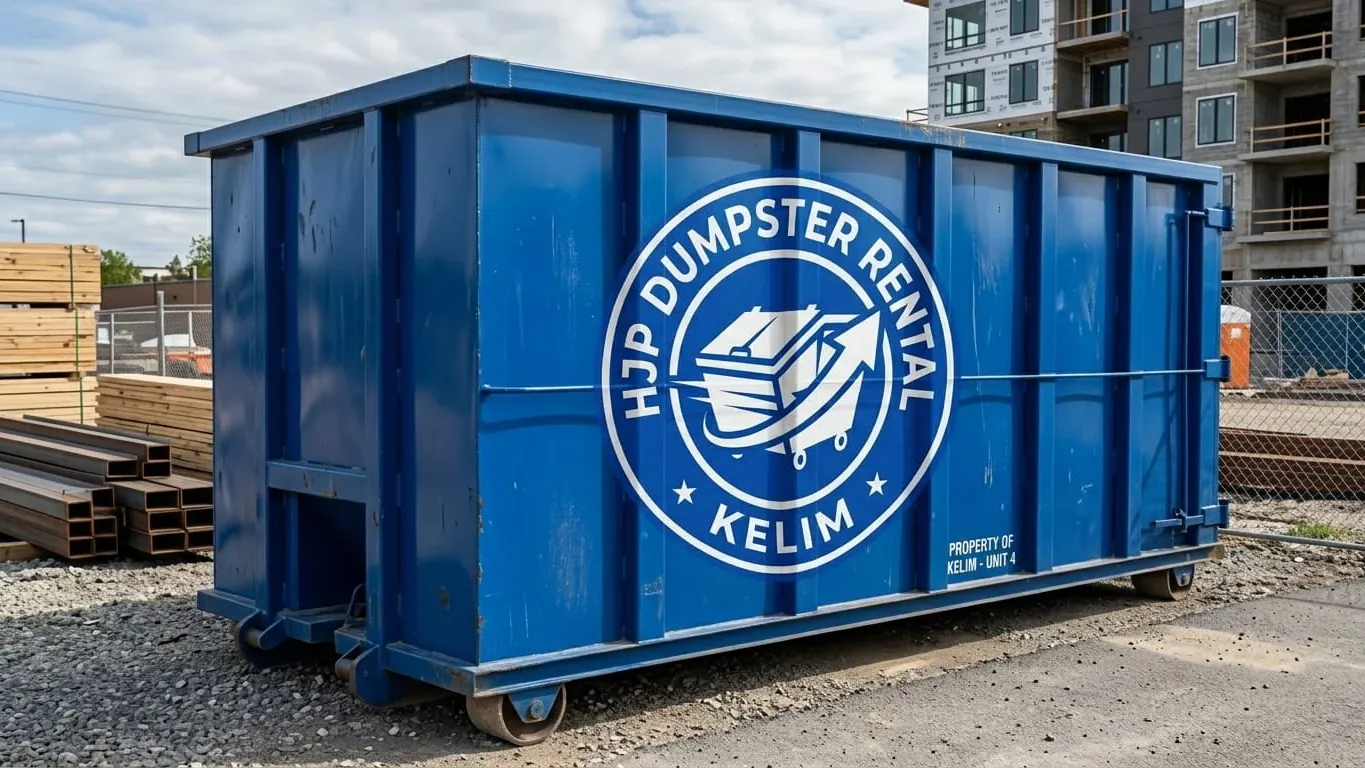
A roll-off is the open-top container that arrives on the back of a truck, tips off onto your ground and gets winched back on when it is full. That is the whole idea, and it is why it beats every alternative for anything above a carload here: neither Weld County nor Larimer County collects residential waste, the Town of Johnstown’s contracted service is a household stream that does not reach commercial customers or buildings of three units and up, and the free county routes are small — Weld’s household hazardous waste facilities take 200 pounds per household per visit, and its seasonal large-item voucher covers one truckload or a one-ton trailer, one per Weld County address. Those are useful for a carload of paint or a mattress. They are not a route for a basement, a tear-off or a build.
Before the size question, there is a jurisdiction question, and on this corridor it is the one that catches people. Kelim is in Larimer County. Johnstown, whose mailing address most of our customers use, is a home rule town that straddles Weld and Larimer — the historic Parish Avenue core on the Weld side, the whole I-25 corridor including the frontage roads and Kelim on the Larimer side. Five municipalities in this service area straddle county lines: Johnstown, Windsor, Berthoud, Erie and Longmont. Two customers a mile apart can answer to two county governments, two building departments and two right-of-way desks. So the first thing we ask on the phone is the address. Our county line guide sets out exactly what changes when you cross it.
The good news is that the permit question resolves cleanly for most people. On private property — a driveway, a yard, a parking lot — no right-of-way permit is in play at all. That covers the overwhelming majority of the containers we set. The street case is where the three governments diverge. Inside the Town of Johnstown, § 7-35 of the municipal code provides that no person shall place, store or maintain a dumpster on any public property unless expressly authorized in writing by the Town, and that placement in violation is considered a nuisance; § 11-23 requires a Town right-of-way permit for work of any kind in the public right-of-way, with the fee set by resolution of the Town Council. Town Hall is at 450 S. Parish Avenue, 970-587-4664 — johnstownco.gov, with the code itself on ecode360. Weld County Public Works, (970) 400-4000, states that all construction activities within county rights-of-way need permits and describes the covered activity as including occupation of them — but the county’s page does not name dumpsters, so we will not tell you it requires one for a container, only that the language is broad and a call is warranted. Larimer County Engineering, (970) 498-5709, issues right-of-way, access and floodplain permits; its published documentation does not address container placement either way, so there is the number and we claim nothing beyond it.
Choosing a size is mostly a matter of knowing what the debris is made of, because weight and volume run out at different times. Bulky and light — furniture, packaging, insulation, fencing, brush — runs out of room first, and that is what the 30 and the 40 are for. Dense material — soil, concrete, brick, tile, roofing — runs out of weight first, and it goes in the 10 or the 15 loaded flat, because a big box full of anything heavy is a truck that cannot lawfully leave. The middle ground, and the default for an ordinary house here, is the 20: basements are normal in this market because both counties require footings at least 30 inches down for frost, so the standard clear-out is a basement plus a garage plus a storage level rather than a couple of rooms. Roofing is the standing exception in the other direction — a tear-off belongs in a 15 or a 20, never a 30 or a 40.
The delivery itself is short and it goes better with a little preparation. We want roughly 60 feet of straight approach, about eleven feet of working width and 20 feet of overhead clearance for the hoist, and we would like the cars moved before we get there. Plywood goes under the wheels and the rear rollers as standard. The container sits five feet clear of combustible walls, openings and roof eave lines, because the 2024 International Fire Code as adopted by Johnstown says so at both § 304.3.4 and § 304.3.5, and every roll-off exceeds both thresholds. Cover the load before it moves — chinook downslope winds are a real Front Range hazard and Front Range Landfill publishes that uncovered or unsecured loads are charged double. And call rather than fill in anything: there is no form on this site, and the yard on (970) 427-0341 will size the box, quote it and book it in one conversation.
What A Roll-Off Gets Used For Around Here
Hail Tear-Offs
The most common single use on this corridor, with seven to nine hail days a year in the most hail-prone corridor in the country. A 15 or a 20, sized on squares and layers, never a 30.
Basement And Garage Clear-Outs
Thirty-inch frost depths make basements ordinary here, and the ordinary residential job is the whole vertical stack rather than one room. That is a 20, or a 30 if the house is being emptied.
New Construction And Remodels
More than 900 residential permits in Johnstown in 2025. Framing scrap, packaging, drywall, sheathing trim and site litter, best run as a mid-size container on booked swaps.
Storm And Wind Debris
Fence sections, siding, soffit, shed panels, deck boards and downed limbs after a wind or hail event. Bulky rather than dense, so the sizing logic inverts and a 30 is often right.
Trench Spoil And Excavation
Footings and services go at least 30 inches down in both counties, so a dig here produces real volume of soil and rock. Heavy material, loaded flat in a 10 or a 15.
Estate And Whole-House Clear-Outs
A lifetime of contents out of a house and its basement, usually over several days and often at a pace set by family rather than by a schedule.
Concrete, Brick And Clean Fill
Driveway sections, patio slabs, block and clean fill kept as a separate clean load, which is worth doing because clean masonry has routes a mixed load does not.
Yard And Brush Clearing
Colorado has no statewide landfill ban on yard waste and the landfills serving this area accept it, but composting is widely available and a clean green load has options a mixed one does not.
Picking A Size Without Guessing
The reliable method is to name the densest thing going in the box first. If the answer is soil, concrete, brick, tile or roofing, you are in a 10 or a 15 and the size is set by weight rather than room. If it is a bounded job with a known edge — one bathroom, one kitchen, one basement bay, one small roof — a 15 is right and it is cheaper than the alternative. If it is an ordinary house clear-out with a basement, a garage and a storage level in it, the 20 is the local default and the commonest mistake we see is booking under it. If the house is being emptied completely, or the yard is full of fence and limb debris after a storm, take a 30. If the material is bulky and light — packaging, insulation, ceiling grid, shelving, cardboard from a build-out — the 40 earns its keep. Anything heavier than that in a 40 will hit a lawful road weight while it still looks empty. Dimensions and clearances are on the container sizes page, and the sizing guide works through real jobs.
10 Yard Dumpster
Broken slab, block, brick and dirt — the box that reaches payload long before it looks full.
View this size →15yd³15 Yard Dumpster
The workhorse for an ordinary single-layer hail tear-off, or one room cleared to the walls.
View this size →20yd³20 Yard Dumpster
A whole-house declutter — the default here — a large roof, or a multi-room remodel.
View this size →30yd³30 Yard Dumpster
A large remodel, a basement strip-out or a full estate cleanout. Never roofing.
View this size →Access, Surfaces And Which Desk To Call
Access first: about 60 feet of straight approach, eleven feet of working width, 20 feet of overhead clearance for the hoist, and a look up for service drops and mature limbs before we commit. Surfaces second: plywood under the wheels and the rear rollers on every delivery, and a preference for concrete or road base over soft ground, because ruts and soft shoulders are the damage that actually happens here rather than cracked slabs. In spring, when the ground has thawed and been watered, that preference gets stronger. Clearance third: five feet off combustible walls, openings and roof eave lines, under the 2024 International Fire Code as adopted by the Town of Johnstown at § 304.3.4 and § 304.3.5, both of which every roll-off exceeds. And in unincorporated Weld County remember that the county enforces no fire code at all — its ordinance leaves the International Fire Code to the local fire district, so a rural clearance question goes to Front Range Fire Rescue on 970-587-4464, not to the county. Permission last: private ground needs no right-of-way permit; public ground inside Johnstown is § 7-35 and § 11-23 territory and a call to the Town on 970-587-4664; unincorporated Weld is (970) 400-4000; unincorporated Larimer is (970) 498-5709. Ask us and we will point you at the right one, but the address decides it, not us.
Not sure this is the right service? Describe the job on the phone and we will point you at the right container even if it is a different service page. Call (970) 427-0341.
Get a flat quote
Two minutes on the phone gets you a size, a price and a delivery slot. No forms.
(970) 427-0341Recommended sizes
How it works
Roll-Off Dumpster Rental in four steps
- 1
Call us
Tell us the project, your address and when you want it. Two minutes on the phone and you have a flat price.
- 2
We deliver
Our driver walks the drop, lays protection boards and sets the container exactly where you want it.
- 3
You load it
Take your time within your rental window. Keep it level with the top rail and we handle the rest.
- 4
We haul it
Call or text when you are done. We pull it, sort what can be recovered and dispose of the rest properly.
Roll-Off Dumpster Rental FAQs
How does the delivery actually work?
You call the yard on (970) 427-0341, tell us the address and what is going in, and we agree a size, a price and a delivery window in one conversation. There is no form on this site and there is nothing to fill in. On the day, the truck backs in, tips the container onto plywood mats where you have asked for it, and leaves. You load it at whatever pace suits, keeping the material level and under the fill line. When you are ready, you call and we route the collection. If the job turns out bigger than expected mid-way, call and we will book a swap rather than let anyone load above the line.
Do I need a permit?
Not on private property. A driveway, a yard, a parking lot — no right-of-way permit is in play at all, and that is the overwhelming majority of placements. It changes if any part of the container has to sit on public ground. Inside the Town of Johnstown, § 7-35 provides that no person shall place, store or maintain a dumpster on any public property unless expressly authorized in writing by the Town, and placement in violation is considered a nuisance; § 11-23 requires a Town right-of-way permit for work of any kind in the public right-of-way, with the fee set by Council resolution. Call the Town on 970-587-4664. In unincorporated Weld County, Public Works on (970) 400-4000 — the county’s language covers occupation of county rights-of-way but does not name dumpsters, so ask. In unincorporated Larimer County, Engineering on (970) 498-5709 — its published permits do not address containers either way. Full detail is in our permits guide.
Will it damage my driveway?
It should not, and we take the two precautions that matter. Plywood goes under the wheels and under the rear rollers on every delivery, because a loaded roll-off puts almost all of its weight through those two contact patches rather than spreading it. And we would rather set the box on concrete or compacted road base than on a lawn or a soft graded shoulder, because the damage that actually happens in this market is ruts and soft ground, not cracked slabs. On a new subdivision lot the finished driveway is usually the strongest surface available. If you are worried about a decorative or stamped surface, say so when you book and we will look at photographs of the approach first. Our driveway protection guide goes through it properly.
What cannot go in the box?
Electronics, first and hardest: banned from Colorado landfills since 1 July 2013 under C.R.S. § 25-17-303, and listed as prohibited on the acceptance sheets of every landfill serving this area. Tires next: Colorado’s waste tire rules route them to registered tire facilities and the local landfills refuse them outright. Then liquids, paint, fuel, oil, solvents, pressurized tanks, batteries, hot ashes, refrigerators, freezers, air conditioners and anything containing asbestos. Household chemicals from a Weld County address go to the county’s household hazardous waste facilities on (970) 400-2217 — free to Weld residents, 200 pounds per visit, no electronics or appliances. Beyond the electronics ban and the tire rules, what a Colorado landfill refuses is largely set facility by facility in its own approved operating plan, which is why we ask what is in the load.
How far do you deliver?
Across Northern Colorado from the yard on the Kelim frontage road: Johnstown and Kelim first, then Milliken, Windsor, Berthoud, Mead, Severance, Loveland, Timnath, Greeley, Evans, La Salle, Platteville, Erie, Longmont, Lucerne and Gill. Some of those are in Weld County, some in Larimer, and five of them — Johnstown, Windsor, Berthoud, Erie and Longmont — are in two counties at once. We will not tell you that another town’s container rules match Johnstown’s, because we could not verify that they do. For a street placement outside Johnstown we will give you that town’s number and tell you to ask. Call (970) 427-0341 and give us the address.
More services
Other things we haul
Residential Dumpster Rental
Driveway placement for the basement, garage and outbuilding cleanouts a northern Colorado house produces.
Learn more →Commercial Dumpster Rental
Containers for businesses and contractors along the I-25 corridor — neither county collects at the curb.
Learn more →Construction Dumpster Rental
Mixed C&D in one roll-off, with next-day swap-outs across Larimer and Weld.
Learn more →Roofing Dumpster Rental
Weight-rated cans sized by squares and layers — hail tear-off is what this market runs on.
Learn more →Same-Day Dumpster Rental
Call before the cut-off and we can usually get a container to you this afternoon.
Learn more →Junk Removal Dumpsters
Clear a basement, garage, shop or outbuilding on your own schedule.
Learn more →Estate Cleanout Dumpsters
Discreet, patient container service for families clearing a lifelong home.
Learn more →Demolition Debris Removal
Containers and fast swaps for decks, outbuildings, sheds, garages and interior gut-outs.
Learn more →Concrete & Heavy Debris
Dedicated heavy cans for broken slab, block and brick, loaded flat and low.
Learn more →Yard Waste & Brush Removal
Clean separate loads — Colorado has no yard-waste landfill ban, so you have real options.
Learn more →Where we deliver
Roll-Off Dumpster Rental across Larimer County and Northern Colorado
Same service, same flat rates, every town below. Pick yours for local placement and permit notes.
Talk to a real person
Need roll-off dumpster rental in Kelim?
Tell us what you are clearing out and we will tell you the right size and the flat price to put it in your driveway. No forms, no waiting on an email — just call and we will sort it out in a couple of minutes.
Serving Kelim, Larimer County and Northern Colorado · Mon–Fri 6:30am–5pm, Sat 7am–1pm