
Cleanouts
Basement and Crawlspace Cleanouts in Kelim, Colorado
A 30-inch frost line is why nearly every house here has a basement, and why basement debris fills a container by weight long before it fills it by volume.
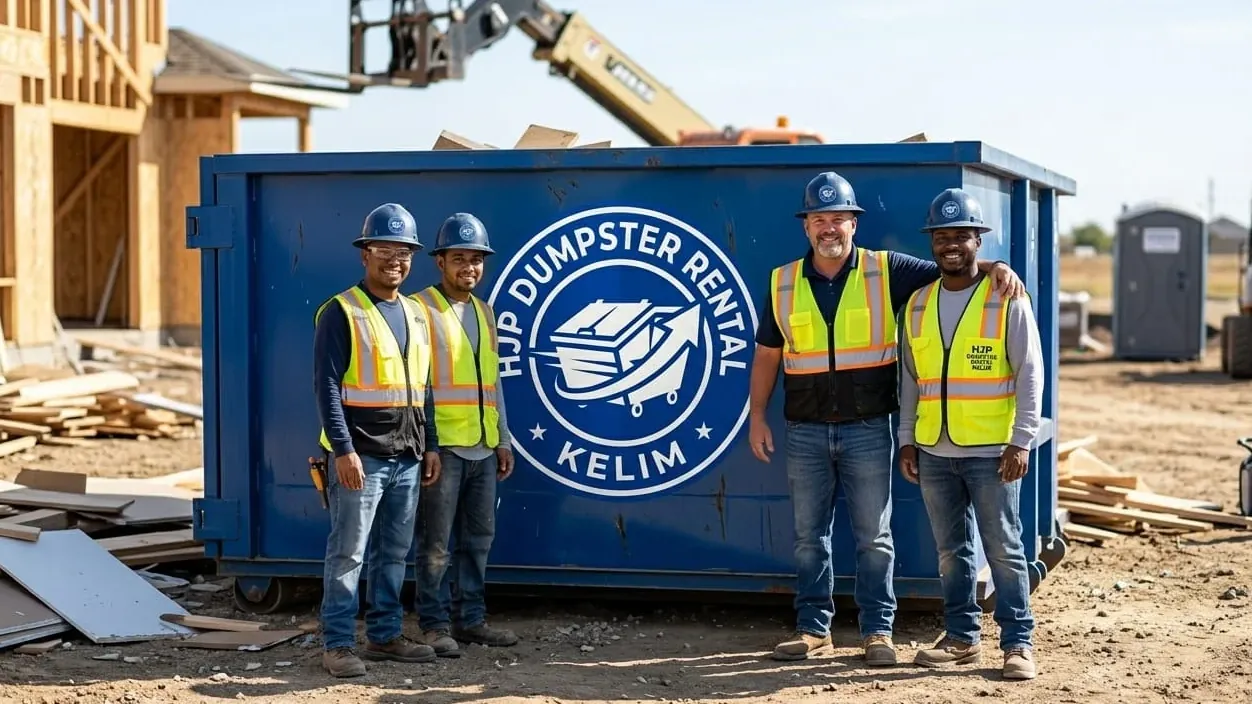
On most residential jobs we run in this market, somebody goes down a set of stairs.
That is worth saying plainly, because people who move here from warmer states are routinely surprised by it, and because it changes almost everything about how a cleanout gets planned — the size of the container, the weight of the load, the route the debris takes to the driveway, and how long the whole thing takes.
Basements are ordinary here. So are crawlspaces under the older houses. And both of them produce a debris stream that behaves nothing like a garage or a spare-bedroom declutter.
Why the ground under this corridor is full of basements
The reason is the frost line, and it is one of the few numbers that does not change when you cross the county line in the middle of this town.
Weld County publishes a 30-inch frost line depth for residential and commercial work in its design criteria. Larimer County states a 30-inch minimum frost depth countywide. Two counties, two separate documents, two different methods, and the same number. Kelim sits in Larimer County at 4,938 feet, on flat high plains rather than in the foothills, and the footings under a house here start at least thirty inches down whichever side of the line the address falls on.
Once a builder is already excavating thirty inches for frost, the marginal cost of continuing down to a full basement is small. That is the standard reason basements are near-universal on the Colorado Front Range, and it is why sewer laterals, water services and foundation drains around here are all set deeper than a newcomer expects.
We have never found a published figure for what share of homes in Johnstown, Weld County or Larimer County have basements, and we are not going to invent one. What we can tell you is what we see: on this corridor, the stairs are part of the job.
The thing that surprises people most: what a basement weighs
A roll-off has a lawful road payload as well as a volume, and basement debris is dense. Drywall, plaster, tile, carpet and pad, framing lumber that has been down there since the house was built, cast iron, old appliances, filing cabinets, and the single heaviest thing per cubic foot in any house — boxes of paper and books.
The practical result is that a basement fills a container by weight long before it fills it by volume. A box that looks two-thirds empty can already be at payload.
How we size it:
- A dense strip-out — drywall down to studs, subfloor up, tile out — usually wants a 10-yard or a 15-yard, because the limit is weight and a bigger box only buys you air you cannot legally use.
- A whole-house declutter that happens to include the basement is the classic 20-yard job. Household goods are bulky rather than dense.
- Concrete, masonry, tile backer and brick do not belong in a mixed load at all. A slab section, an old basement bar with a block base, a hearth — those go in a separate, smaller, heavy-debris container. See concrete and heavy debris.
Where a job genuinely needs more than one box, the right answer is almost always one container plus a scheduled second pull arranged before work starts, not a larger container that cannot be hauled full. Our sizing guide works the arithmetic through.
The stairway decides the schedule
Before anything else, walk the route the debris will actually take, in the direction it will take it.
- Is there a walkout or a bulkhead? A walkout basement is a different job from an interior-stair-only basement, and it is usually half the labor.
- Measure the turn at the bottom and the top. Sectional couches, pool tables, workbenches, chest freezers and full-size treadmills frequently went into a basement before the stairwell was finished, or in pieces. They come out in pieces too.
- Where does the box sit relative to the door? Every extra thirty feet of carry is real time. On a long carry a wheelbarrow and a sheet of plywood over the lawn beats twenty trips with a hand truck.
- Egress windows. A finished basement bedroom has one, and it is sometimes the shortest route out for drywall and carpet. Protect the well and the frame if you use it.
The five-foot rule, and where it bites on a basement job
The container wants to be right beside the walkout door. The fire code has an opinion about that.
The Town of Johnstown adopts the 2024 International Fire Code. Under § 304.3.5, dumpsters and containers with an individual capacity of 1.5 cubic yards or more shall not be stored in buildings or placed within five feet of combustible walls, openings or combustible roof eave lines. The adjacent § 304.3.4 applies the same five-foot rule at 1.0 cubic yard, with an exception where the container itself is built of noncombustible or low heat release material. Every roll-off we place is far above both thresholds, so the practical answer never moves: five feet, always, and a doorway is an opening.
Front Range Fire Rescue provides life safety services to Johnstown, Milliken and Weld County and will answer a placement question directly: 970-587-4464, frfr.colorado.gov. Worth knowing that in unincorporated Weld County the county itself enforces no fire code — its building ordinance provides that the International Fire Code applies only when adopted by a local fire district. Out there the district is the authority, not the county.
On a driveway or a private lot, no right-of-way permit is in play at all. If any part of the container has to sit on public property inside the Town of Johnstown, § 7-35 is explicit: no person shall place, store or maintain a dumpster on any public property unless expressly authorized in writing by the Town, and placement in violation is considered a nuisance. Town Hall is 970-587-4664; the permits guide has the rest.
Crawlspaces are a different animal
A crawlspace cleanout is small in volume and large in difficulty. What comes out of one is usually some combination of torn vapor barrier, batt insulation that has fallen off the joists, rodent-contaminated material, abandoned ductwork, old plumbing, and whatever the previous three owners decided to store down there.
Three things matter more here than in a basement:
- Bag at the hatch, not at the truck. Contaminated insulation and old vapor barrier shed the entire way across a finished floor otherwise.
- Wear the right protection. Confined space, poor ventilation, dust, rodent droppings and fiberglass. A respirator rather than a dust mask, coveralls, gloves and eye protection.
- Do not disturb unknown wrap. In a pre-1989 house, the insulation on ducts and pipes in a crawlspace is exactly the material the asbestos rules are written about. Stop and identify it before you pull on it.
Volume-wise a crawlspace rarely needs more than a 10-yard. The time is in the crawling.
Radon, and why a lot of basements get opened up in the first place
A meaningful share of the basement work in this market is finishing, refinishing or mitigation, and radon is part of the reason.
We are deliberately not going to publish a zone number off the federal radon map for Weld or Larimer County. Different copies of the same federal map gave us different answers, and a confidently wrong number is worse than none. The EPA’s own guidance is more useful than a zone designation anyway, and it is unambiguous:
“Homes with elevated levels of radon have been found in all three zones. All homes should be tested, regardless of zone designation.” — US EPA
A basement that is already open to the framing, with the slab exposed and the sump pit accessible, is the cheapest moment in the life of a house to test and, if needed, to run mitigation pipe. If you are gutting it anyway, do the test while the container is on the drive.
Two questions to settle before the sledgehammer comes out
Asbestos, on anything built before 1989
Colorado treats asbestos as an air quality matter, under the Air Quality Control Commission’s Regulation No. 8, Part B, administered by CDPHE’s Air Pollution Control Division. That is structurally different from how many states handle it, and the residential numbers are tighter than most people expect.
- Single-family trigger levels: 32 square feet, or 50 linear feet on pipes, or the volume equivalent of a 55-gallon drum. Those are far tighter than the federal commercial figures people half-remember.
- A ten working-day notification is required before work commences, for removal above trigger levels or any demolition activity.
- Published fees for the residential path run from $60 for a single-family notice to $180 for a single-family 30-day permit.
- An inspection by a certified asbestos building inspector is required before renovation or demolition. Buildings constructed after 12 October 1988, with documentation confirming no asbestos-containing materials were used, are exempt.
- CDPHE asbestos: 720-507-5136, cdphe.colorado.gov.
Read that first bullet again with a basement in mind. Thirty-two square feet is a small bathroom floor. A modest pre-1989 basement bathroom or wet-bar gut, with sheet vinyl and its backing, is a certified-inspection job in Colorado. Popcorn ceilings, nine-inch floor tile, duct wrap and pipe insulation are the usual suspects.
Asbestos-containing material never goes in a rented container. WM’s North Weld Landfill lists friable asbestos among the wastes it refuses, so a load like that has nowhere obvious to go locally in any case.
Lead paint, on anything built before 1978
The federal Renovation, Repair and Painting rule applies to compensated work that disturbs painted surfaces in housing built before 1978. Here is the part that trips up contractors who have worked in other states: Colorado is not an EPA-authorized RRP state. Firms certify with EPA directly, not with a Colorado agency.
The good news is that the exposure in this market is small and geographically concentrated. Johnstown’s median year built is 2007, 71.8 percent of its housing dates from 2000 or later, and only about one home in ten predates 1980. The pre-1978 stock sits in the historic Parish Avenue and Main Street core and the equivalent older blocks in the neighboring towns — not spread across the subdivisions.
If you are digging as well as clearing
Plenty of basement work turns into excavation: a sewer lateral, a sump pit, a new egress window well, a foundation drain, a footing repair.
That is a Colorado 811 job, and the notice period is a Colorado number, not the one you may be carrying from another state. Colorado law requires at least two business days’ notice, not counting the day you call — C.R.S. Title 9, Article 1.5. Colorado 811 itself advises allowing three, which is sensible margin rather than the statutory minimum. White-line the dig area first with paint, flags or stakes, then call 811 or 800-922-1987. Markings stay valid up to thirty calendar days. colorado811.org.
Two local reasons to take it seriously rather than treating it as paperwork. Rural properties in this area may have oil and gas flowlines and gathering lines crossing them that no homeowner has ever been told about — Weld County produced more than 80 percent of Colorado’s oil and gas in 2024, per federal energy data. And the 30-inch frost line means the services you are looking for are deeper than the shallow runs people picture.
Placing a container is not excavation and does not require a locate. But a loaded container parked over a shallow service line is its own risk, which is one more reason we care where the box sits.
One more thing about digging here: spoil is heavy and there is more of it than you think. Thirty inches of frost depth means deeper trenches, and dirt is the densest thing we haul. A 10-yard container of soil outweighs a 30-yard container of furniture. Never put spoil in a large box.
What cannot go in the container
Basements are where the awkward items live. The short list:
- Electronics — banned from Colorado landfills since 1 July 2013 under C.R.S. § 25-17-303. The old CRT television in the corner, the tower under the workbench, the stereo. The landfills serving this area list electronic waste as prohibited, and Weld County’s household hazardous waste facilities do not accept them either.
- Tires. The landfills here refuse them outright, and Colorado’s waste tire rules require state registration to transport ten or more.
- Paint, solvents, fuel, pool chemicals, pesticides, lead-acid batteries. Weld County residents have two free household hazardous waste facilities: 1311 North 17th Avenue, Greeley (Tuesday, Thursday and Saturday, 8 a.m. to 5 p.m.) and 5500 Highway 52, Dacono (Wednesday, Friday and Saturday, 9 a.m. to 4 p.m.), (970) 400-2217. Limits: 200 pounds per household per visit, nothing in containers over five gallons, no leaking containers, nothing in plastic bags. Electronics and appliances are not accepted there.
- Appliances with refrigerant — the basement chest freezer, the old refrigerator, the dehumidifier — need professional coolant removal before a scrapyard will take them.
And a Kelim address is a Larimer County address, which is not intuitive when the mail says Johnstown. Larimer County residents use the Central Diversion and Transfer Station, 2388 W. Trilby Road, Fort Collins, (970) 498-5772. Our Colorado disposal rules guide lays out the whole picture.
What goes under the container
A loaded basement box is heavy, and it is sitting on a driveway. Plywood under the wheels and under the rear rollers is standard on our deliveries; it spreads the point loads at the two places that actually take damage. On soft ground or a graded shoulder, especially in spring, it matters more rather than less. The driveway protection guide covers what to clear before we arrive.
Cover the load before it goes anywhere. Chinook downslope windstorms are a documented Front Range hazard here, and insulation, felt paper, packaging and light plastic do not stay in an open box in a gusty afternoon. Front Range Landfill also publishes that all incoming loads are subject to random inspection and that uncovered or unsecured loads will be charged double.
The order that works
- Walk the route out. Measure the stairwell turn and the door.
- Settle asbestos and lead first if the building predates 1989 or 1978.
- Separate the four streams before you start: landfill, heavy debris, household hazardous waste, and electronics.
- Book the container for the day you will actually load it, and tell us the placement constraint at booking.
- Load heavy and low at the front, light on top, and stay below the rails.
- Cover it.
We have been running containers out of our yard on the Kelim frontage road since 2013, and we have carried a lot of drywall up a lot of stairs. Tell us the address, the square footage coming out and whether there is a walkout, and we will tell you the box. Call HJP Dumpster Rental at (970) 427-0341. Residential service · sizes · FAQ.
Questions this guide did not answer? Call (970) 427-0341. We would rather spend two minutes on the phone than have you order the wrong container.